
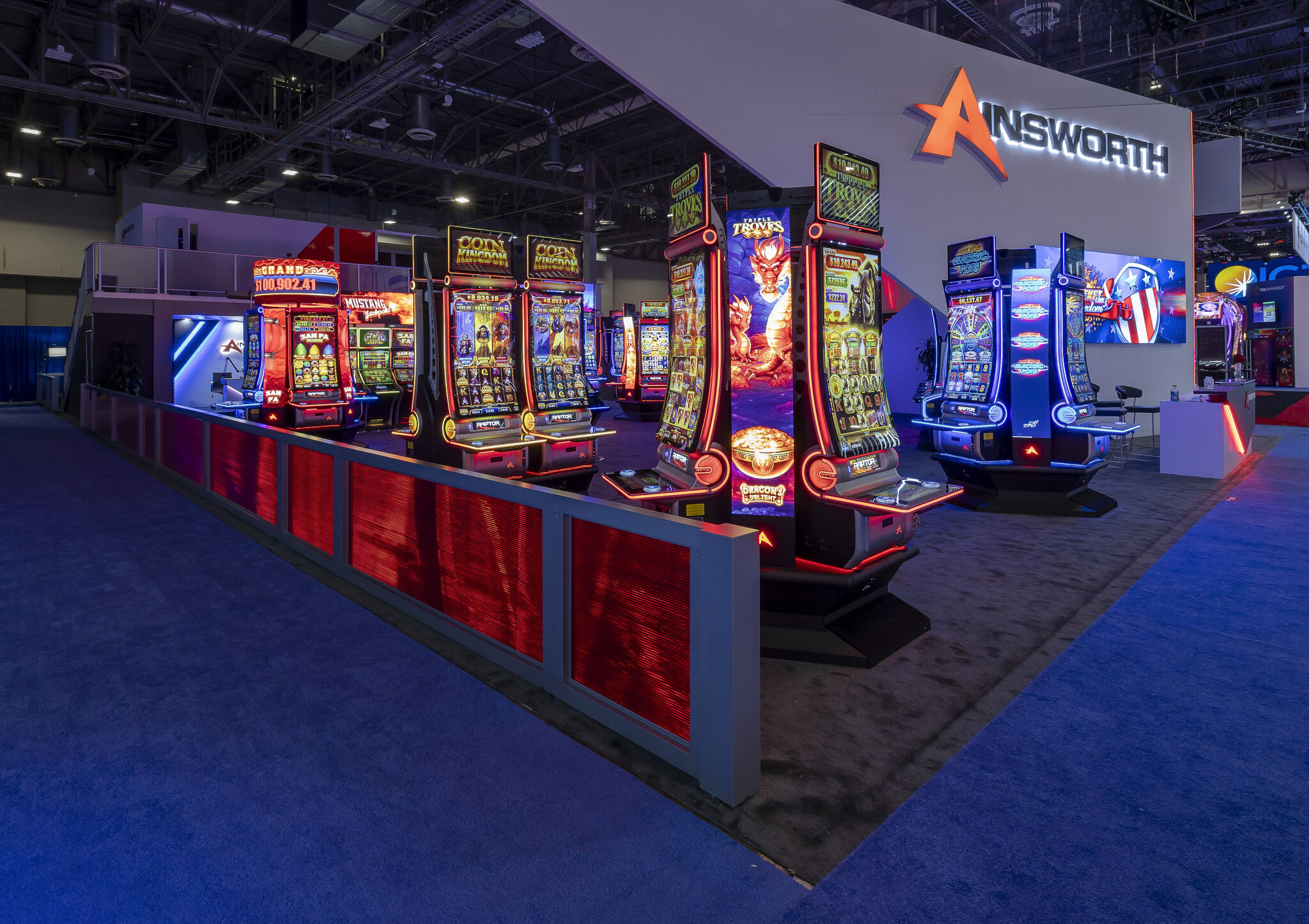

Kjerulf Ainsworth, the second largest shareholder in Australian slot machine supplier Ainsworth Game Technology (AGT) and son of company founder Len Ainsworth, says he has no intention of selling his stake in the company and promised to continue pursuing legal action on behalf of minority shareholders after successfully seeing two key resolutions put forward by Novomatic at Wednesday’s Annual General Meeting (AGM) voted down.
The AGM was also notable for AGT’s non-executive chairperson Danny Gladstone and CFO Mark Ludski admitting they had in 2018 received payments that were undisclosed at the time totaling a combined AU$15 million (US$10.7 million) following the sale of a controlling stake in the company by Len Ainsworth to Novomatic. The payments, first reported by the Australian Financial Review in February of this year, were made by Len Ainsworth – allegedly in connection with the successful sale of his shares.
Kjerulf has promised to pursue legal action in regard to these payments in a bid to have the money returned to shareholders.
The resolutions voted on at Wednesday’s AGM included amendments to the constitution relating to disclosure of director interests and a proposal to renew proportional takeover provisions. Both fell narrowly short of the required 75% support with a little under 74.2% of votes in favor of each.
Another resolution to have former AGT CEO Lawrence Levy return as a non-executive director, which was backed by Kjerulf, fell well short with just 25.19% of votes.
Nevertheless, Kjerulf told Inside Asian Gaming that he would continue his fight against Novomatic and AGT management in the wake of the undisclosed payments revelation, a bribery case in Austria involving Novomatic owner Johan Graf and former AGT CEO Harald Neumann, and questions over the group’s activities in Latin America – specifically the circumstances surrounding a substantial, retrospective payment of import duties in Mexico.
“What Ainsworth really needs now is performance,” Kjerulf said. “It needs fresh blood at board level. It needs people willing to challenge what’s happening.”
According to Kjerulf, the failed resolution on proportional takeover provisions was an attempt by Novomatic to “remove me as a competitor” in guiding governance of the company and potentially further increasing its stake.
“They were looking for a way to tilt the table in their favor by restricting proportional takeover bids, which removes me as a competitor due to the creep restrictions under Australian takeovers law,” Kjerulf said, referencing a duo of proportional takeover offers under which he has gained an 8.74% stake in AGT.
“There is one remaining buyer and that’s me, and I’ve been actively buying for a long time now. [Novomatic] doesn’t want any competition, so they put the proportional bid [restriction] proposal in to stop me availing myself of proportional bids.”
Kjerulf also alleged that the resolution around disclosure of director interests was designed to give the appearance of increasing accountability without addressing the loophole that allowed for the nondisclosure of the payments to Gladstone and Ludski in 2018 in the first place.
“They’re basically willing to disclose everything except the one thing they should be disclosing – and that is payments that could be made to directors or officers of the company from people outside the company,” Kjerulf said.
The governance of both Novomatic and AGT has already come under intense scrutiny in recent months, with Austria’s Public Prosecutor’s Office for Economic Affairs and Corruption in February filing charges against two Novomatic executives – understood to be Novomatic’s owner Johann Graf and former Novomatic and AGT CEO Harald Neumann – for bribery related to a historical investigation first launched in 2018. Neumann had previously stepped down from AGT last October after the Nevada Gaming Control Board opted not to renew his state gaming license, with Ryan Comstock earlier this month named as AGT’s new CEO.
It remains to be seen whether Novomatic will renew efforts to acquire more shares in AGT with a view to taking it private. Novomatic currently holds a 67.4% stake in the Australian firm, increased from 52.9% via a takeover bid that concluded in February. A previous scheme of arrangement aimed at taking full ownership of AGT was abandoned when it became clear that a block of smaller AGT shareholders led by Kjerulf Ainsworth had rallied enough support to block the transaction.
Under Australian law, Novomatic – which had issued a “full and final” bid of AU$1.00 per AGT share – will be entitled to put forward a renewed and increased bid from 8 June, although AGT shares are now trading much higher and closed at AU$1.50 on Wednesday.
On his own plans, Kjerulf told IAG, “I’ve given undertakings to some of the regulators that I wasn’t interested in increasing my position by 10% or 20% or 30% [and] I don’t really have the cash to go out and buy huge blocks of stock at the moment.”
However, he also made it clear he isn’t going underground anytime soon.
“Ultimately, the key issue remains unchanged,” he continued. “Ainsworth needs better governance, it needs stronger management, it needs proper accountability and shareholders deserve transparency about what’s happened in the past and what’s happening now. That’s really what this entire dispute comes down to.
“The resolutions today were important because they prevented changes that, in my view, would have reduced accountability rather than increased it. The minority shareholders stood up and made their voices heard. For now, that’s a positive outcome.
“But there is still a long way to go. There are ongoing legal proceedings. There are ongoing regulatory issues. There are still unanswered questions about payments, disclosures, governance and the conduct of individuals involved with the company.
“Those issues aren’t going away. They’ll continue to be examined over time.
“As for me, I’ll continue doing what I’ve been doing all along. I’m not selling, I’m not going away and I’m going to continue pursuing the matters that I believe need to be pursued in the interests of shareholders.”
RelatedPosts