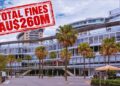


Australia’s Star Entertainment Group became both EBITDA and cash flow positive for the first time in more than two years in the three months to 30 September 2026, booking increased revenues and lower expenses at both its Sydney and Gold Coast properties.
Releasing its financial results for the quarter shortly before commencement of its Annual General Meeting on Tuesday morning, Star revealed group-wide revenues of AU$284 million (US$199 million) – up 1% year-on-year and 8% higher than the June quarter – with Group EBITDA of AU$12 million (US$8.4 million). This compared to an EBITDA loss of AU$13 million (US$9.1 million) a year earlier and a loss of AU$9 million (US$6.3 million) in the June quarter.
Star noted that operating free cash flow excluding one-off items was positive with the 2027 financial year – running from 1 July 2026 to 30 June 2027 – is expected to be the first time Star will generate net annual operating cash inflows before one-off items in more than two years. Likewise, it is the first time that The Star Sydney and The Star Gold Coast have reported combined revenue growth since mandatory quarterly reporting kicked in from the September 2024 quarter.
The Star Sydney saw revenue rise by 1% year-on-year and 8% sequentially to AU$162 million (US$114 million), with Segment EBITDA of AU$15 million (US$10.5 million), while The Star Gold Coast saw a 12% year-on-year and 9% quarter-on-quarter increase in revenue to AU$117 million (US$82.0 million) with Segment EBITDA of AU$20 million (US$14.0 million).
The company also received operator fee revenue of AU$5 million (US$3.5 million) for The Star Brisbane following the recent sale of its 50% ownership stake in the property to its former Destination Brisbane Consortium partners, Chow Tai Fook and Far East Consortium.
In its results release, Star provided an update on key initiatives currently being undertaken in its bid to boost operational performance and fulfil regulatory obligations with a view to returning to suitability. As reported by IAG, the NSW Independent Casino Commission recently opted to extend The Star Sydney’s license suspension and the term of the property’s Manager until 30 June 2027 due to ongoing compliance concerns.
Star noted that one of the objectives of its remediation plan is to transition to a decentralized operating model with the intention of promoting greater accountability at the property level for business performance, risk and compliance.
“This quarter The Star has pushed many critical, customer-facing functions to the properties,” it said. “Consequently, the properties now have the capability to operate independently. Corporate retains remediation, legal and compliance oversight, technology, audit, tax and consolidated reporting. The Star will continue to drive efficiencies in the corporate functions and empower the properties, which is expected to further reduce unallocated corporate costs as this decentralization model takes shape and is embedded.
“The Star, in consultation with its major shareholders, continues to review the strategy of its operations and the resourcing structure. Significant focus and priority has been given to improving the patron experience and marketing efforts to reinvigorate growth. In addition, a number of cost out initiatives, including the streamlining of the corporate office, have been implemented during H2 FY26 and are ongoing.
“Further initiatives at the properties and re-examination of all aspects of operations including reducing direct and indirect cost pools are ongoing at both the properties and within corporate and are expected to continue to further reduce ongoing operating costs in order to fund increased marketing investments.”
Star added that it maintains sufficient liquidity to continue and improve operations, with cash and cash equivalents of AU$239 million (US$168 million) as of 30 September 2027.
However, the company is expected to this week learn the scale of fine from AML regulator AUSTRAC, with the Federal Court due to hand down its decision on Wednesday morning.
Crown in 2024 accepted an AU$450 million (US$315 million) settlement agreement with AUSTRAC for similar historical compliance failures.
RelatedPosts