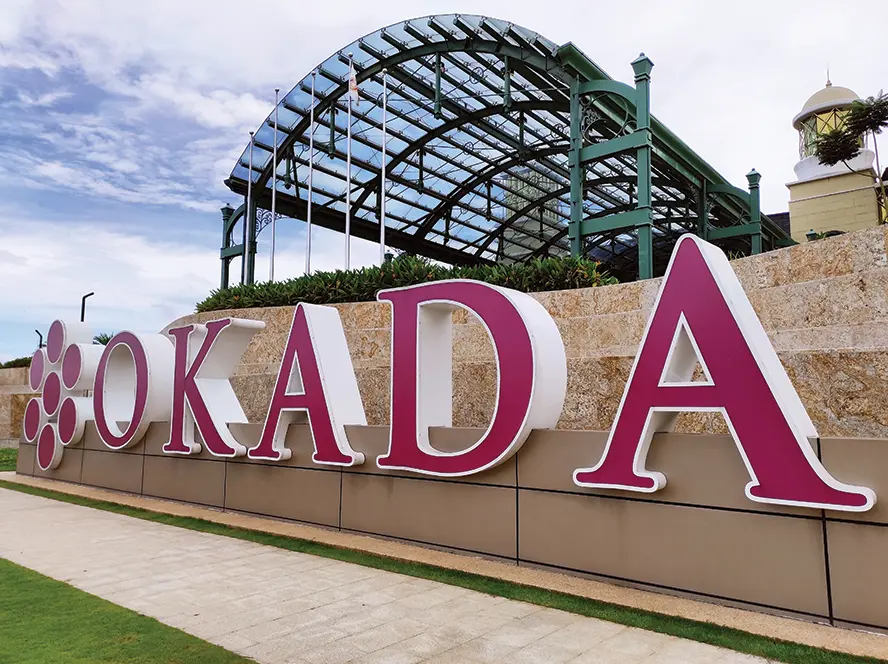

Embattled Philippines integrated resort Okada Manila is expected to generate negative free cash flow for at least the next three years, with the collapse of the country’s VIP gaming market, online migration and macroeconomic headwinds suppressing Adjusted EBITDA at below profitable levels, according to analysis by ratings agency Fitch.
The assessment, which focused on Okada Manila’s Japanese parent company Universal Entertainment Corp (UEC), noted that the performance of the Philippine IR remains the key swing factor that will determine UEC’s credit profile in the years ahead. UEC is also a manufacturer of pachinko and pachislot machines for the domestic Japanese market.
In a detailed report, Fitch said that a recent recovery in UEC’s pachinko and pachislot arm has not been enough to offset the weakness at Okada Manila, which has been heavily impacted by the structural decline of the VIP mix. Specifically, the ratings agency highlights that VIP accounted for just 20% of Okada Manila’s gross gaming revenue in 2025 – down from 35% in 2023 – and that the lower-spending mass segment was not sufficient to offset the decline.
“Competition, online migration and macroeconomic headwinds are likely to continue limiting integrated resort revenue and EBITDA recovery,” it said.
“Fitch has revised its rating case to assume subdued EBITDA and negative free cash flow in 2026 and 2027, with annual EBITDA of about JPY19 billion (US$120 million) through 2028 – below the approximately JPY20 billion (US$127 million) needed to cover cash interest and capex. This will reduce liquidity headroom despite the absence of significant debt maturities before August 2029.”
Fitch added that the pachinko and pachislot segment offers “some diversification and near-term recovery potential” but said UEC’s long-term outlook remains constrained by structural market decline, leaving the company exposed to its concentrated Philippine integrated resort operations.
Specifically, Fitch pointed out that Okada Manila currently comprises around 53% of group revenue – leaving UEC materially exposed – while it described UEC management as having “unpredictable risk appetite, erratic strategy and lack of clear measures to address the deterioration in its integrated resort operations.”
Okada Manila, the agency explained, faces intensifying competition in Entertainment City, and the Philippines’ domestic online gaming market, into which Okada Manila has launched its own online platform, remains “nascent” and is not yet a material revenue contributor.
UEC recently outlined its intention to focus its energies on the Philippine mass market and the group’s new online gaming platform in a bid to boost performance at Okada Manila, where 2Q26 net sales fell 13.0% year-on-year to JPY30.1 billion (US$191 million) and Adjusted EBITDA fall 62.5% to JPY2.74 billion (US$17.4 million), resulting in an operating loss of JPY1.37 billion (US$8.7 million).
RelatedPosts