
Resorts World Sentosa’s SG$6.8 billion (US$5.3 billion) 2.0 expansion project is a “necessary investment” for the company to remain competitive with its Singapore duopoly rival Marina Bay Sands (MBS), according to financial research firm CreditSights.
However, CreditSights questions how effectively the transformation will position RWS to compete in the lucrative premium mass gaming segment – one of the primary reasons parent company Genting Singapore has committed to such significant spending.
In a detailed analysis of the RWS 2.0 expansion project, CreditSights argues that the Sentosa integrated resort is at a structural disadvantage to MBS, which has successfully leveraged its accessible central location to better capture broad tourist flows, business traveler traffic and convention attendees. By focusing on luxury retail and hospitality, MBS has attracted affluent gamers, who drive a large portion of its casino profits.
In contrast, RWS’s Sentosa Island location is more destination-oriented, supporting leisure and family tourism and therefore attracting the regional mass market through family-oriented attractions, including resorts, beaches, entertainment activities and theme parks. The casino then acts as a key revenue generator once visitors are on the property.
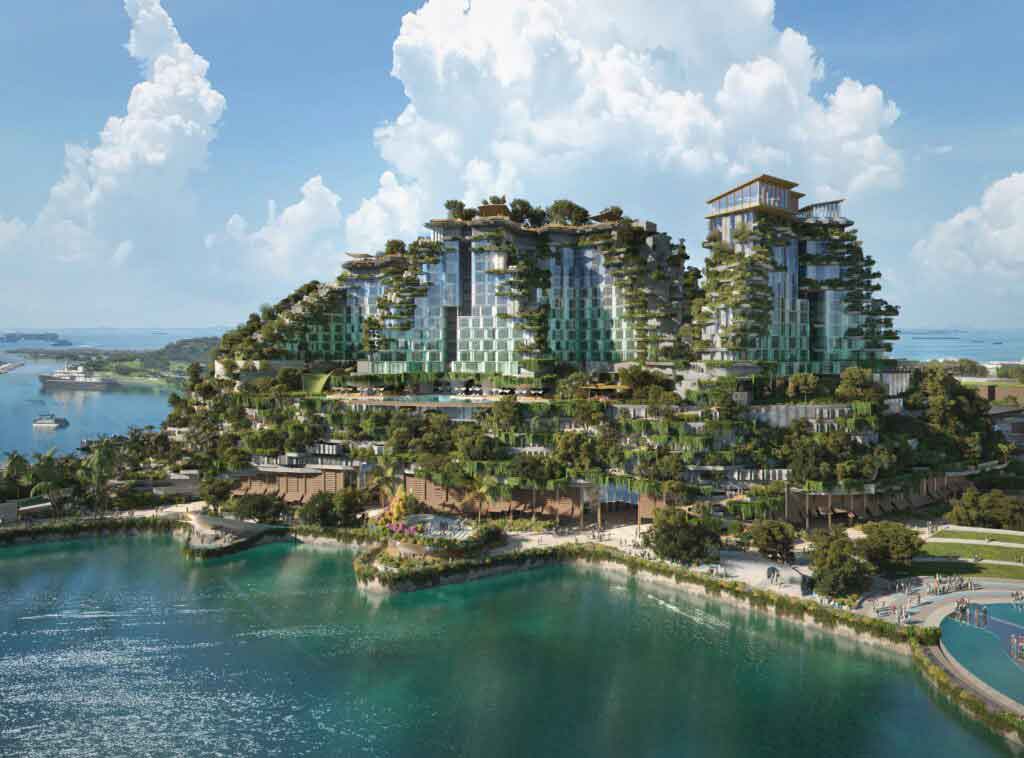
RWS 2.0 aims to level the playing field somewhat by expanding the resort’s gross floor area by around 50%, introducing a grand waterfront development, expanding its popular Universal Studios Singapore theme park and its oceanarium. It also plans to add revamped and new hotels, casino floor upgrades, fresh retail and dining areas, and a waterfront promenade not dissimilar to the waterside Marina Bay area alongside MBS.
Despite these plans, CreditSights said it remains skeptical about whether future earnings will be sufficient to recoup the SG$6.8 billion spend, of which SG$4.8 billion (US$3.8 billion) remains to be spent.
“We are not convinced that RWS 2.0 will drive commensurate gaming growth necessary to improve its competitive market share,” the financial research firm said.
“Despite RWS’s push into premium mass, we believe MBS’s dominant position in that segment limits RWS’s ability to go up the premium value chain and earn more for similar visitations or to recapture meaningful market share. In fact, we expect MBS’s market position to strengthen with its own SG$10.5 billion (US$8 billion) expansion.
“While RWS casino is refurbishing its interior design and décor on casino floors in a phased, piecemeal manner to appeal to the current generation of casino patrons, we do not think it is transformational enough to drive material growth in gaming revenues.”
Even so, CreditSights reiterates that Genting Singapore’s investment in RWS is a necessary one and that there are other benefits to doing so beyond competing for premium mass market share.
A modernized casino, supported by the suite of new and upgraded hotels, could, it observes, help RWS recapture some of the gaming market share it has lost in recent years – particularly with the property’s hotel occupancy rates sitting above 95%.
“In addition, the Singapore gaming pie continues to expand and the competitive dynamic is not entirely zero-sum,” CreditSights said. “Even though RWS and MBS compete for the same Singapore gaming wallet, their core customer segments differ, as they have since day one.
“RWS and MBS are not mutually exclusive either, with many tourists opting to visit both properties in a single trip.
“We see RWS’s longstanding focus on non-gaming attractions as the pull factor as rational. Given RWS’s inherent disadvantages in location and premium-market positioning, focusing on family-oriented amenities seems the most effective way to leverage Sentosa’s leisure appeal and drive resort-wide spend. Competing head-on with MBS in the luxury segment may be counterproductive.”
Beyond strengthening competitiveness, CreditSights notes that Genting Singapore’s commitment to invest SG$6.8 billion in RWS should support future license renewals – a reference to the shortened two-year renewal RWS was granted in February 2025 because of “unsatisfactory tourism performance.”
Ultimately, however, the success of RWS 2.0 could come down to management, with CreditSights hopeful that the presence of former company CFO Lee Shi Ruh, who succeeded Tan Hee Teck as President and COO in August 2025, could support renewed strategic focus and improved execution.
“Given her track record of overseeing Genting Singapore’s conservative financial management over the past decade, we take some comfort that financial discipline should remain somewhat intact,” the financial research firm said.
RelatedPosts