

Fitch Ratings said in a Monday note that Malaysian gaming giant Genting Berhad risks a ratings downgrade if it doesn’t effectively reduce its debt in the short-term, warning that the group’s leverage is high for its current “BBB” rating.
That’s despite Genting Bhd subsidiary GOHL Capital Holdings Limited proposing to issue perpetual securities in what is likely an effort to improve its balance sheet and provide a greater runway to get its finances back on track following a series of recent substantial investments. These investments include the acquisition of a much larger stake in Genting Malaysia, obtaining a full casino license in New York and the US$5 billion expansion of its Singapore IR Resorts World Sentosa.
Fitch said it will treat the perpetual securities – to be issued in two tranches – as half debt, half equity, allowing Genting to reduce its leverage from 5.5x currently to 4.8x. However, the agency notes that this essentially provides accounting relief rather than cash deleveraging and the outlook for Genting therefore remains at “Negative.”
“Genting’s leverage is currently high for its rating and the Negative Outlook reflects the risk that it may be unable to deleverage to a level consistent with its rating,” Fitch said.
“We expect Genting’s EBITDA net leverage to peak at around 5.5x in 2025 on large capex plans and investments, including the acquisition of an additional stake in Genting Malaysia Berhad. The ratio should then fall to around 3.5x by 2028.”
On the group’s “BBB” rating, Fitch added, “Although the proposed [issue of perpetual securities] improves credit metrics, incremental earnings and demonstrated commitment to deleveraging are key for Genting to maintain its rating.
“2Q26 is especially important, as the economic impact of the Iran war will become clearer and Genting New York LLC will have rolled out its new gaming tables and its outperformance, relative to our forecasts, could mitigate the forecast rise in leverage.”
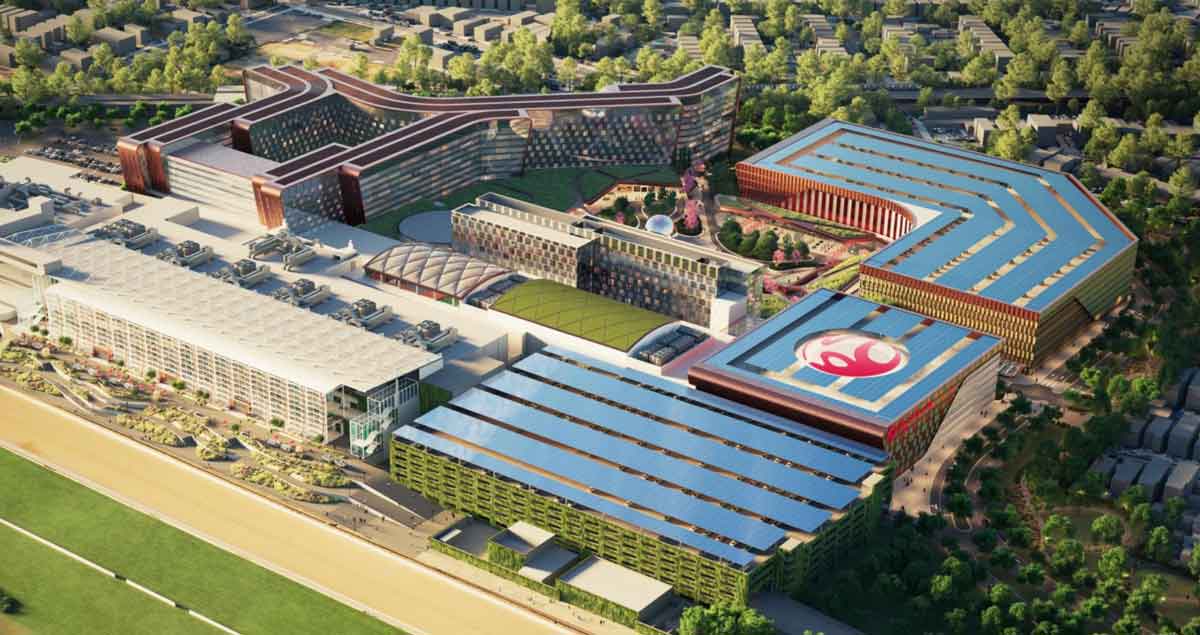
With all eyes on Resorts World New York City (RWNYC), which won a full casino license late last year and expects to relaunch with gaming tables by mid-2026 as part of its Phase 1 expansion, Fitch said the property’s performance will be crucial to the Genting Group’s ability to deleverage rapidly.
“We estimate [RWNYC] to generate EBITDA of around US$215 million in 2026 as the casino ramps up,” it said. “Our forecast assumes that by 2028, EBITDA from [Genting New York] will reach around US$460 million based on the tax regime in its proposal. The casino has first-mover advantage in New York and benefits from a dense population and high-income flows.
“However, delays in ramp-up by [RWNYC] or its inability to convert its asset into a high-margin casino, together with slower recovery at Genting’s other gaming operations, are risks to our forecast deleveraging path. Macroeconomic uncertainties, including potential second-order impact from a prolonged Iran conflict, which may affect tourism arrivals and consumer sentiment, could also affect operations and profitability.
Genting has pledged total investment of US$5.5 billion to expand RWNYC, of which US$1.1 billion has been spent. The remaining US$4.4 billion, which includes licence fees of US$500 million and US$350 million on the renovation of existing facilities to be incurred in 2026, will be phased over five years.
RelatedPosts