
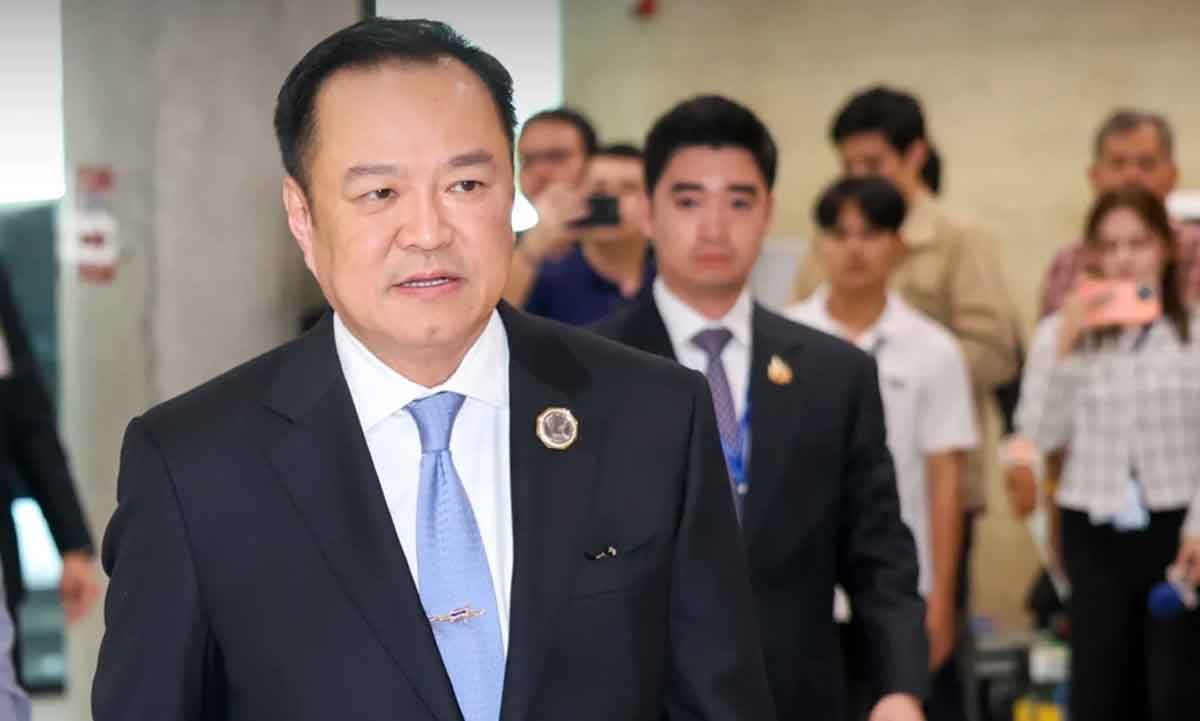

Thailand’s royalist Bhumjaithai Party was on track to secure a comfortable election win overnight, with Prime Minister Anutin Charnvirakul declaring victory and the reformist People’s Party conceding defeat late Sunday.
Early polling showed Bhumjaithai winning as many as 200 seats in the 500-seat House of Representatives, well ahead of the 110 to 115 projected for the People’s Party, providing it the opportunity to court coalition partners and form government. The People’s Party has already stated it will not be part of any coalition and intends to stay in opposition.
The election result is seen as a major victory for the establishment given Bhumjaithai’s close ties to the monarchy and its influence over the military, with rising nationalist sentiment amid the ongoing border conflict with Cambodia seen as a major reason for the party winning three times as many seats as it did in the last election.
As such, it is expected that Anutin will resist recent calls from pro-democracy supporters to reform the monarchy, curb military influence or make any major changes to the constitution.
The biggest questions, however, revolve around Thailand’s sluggish economy and falling tourist numbers – particularly those from mainland China – given recent safety concerns.
Bhumjaithai was a driving force behind the collapse last year of efforts to legalize casino gaming within large-scale entertainment complexes, orchestrating in the process the downfall of former Prime Minister Paetongtarn Shinawatra and her Pheu Thai Party.
Legal casinos or any other major economic reforms are therefore seen as unlikely, with Anutin stating Sunday that the election result leaves Thailand in a “steady state”.
Peter Mumford, a consultant at Eurasia Group, told Bloomberg, “If Bhumjaithai leads the next government, fiscal policy will likely be more prudent, though still with some stimulus. Economic reforms would likely only be incremental under a conservative-led government.”
RelatedPosts