
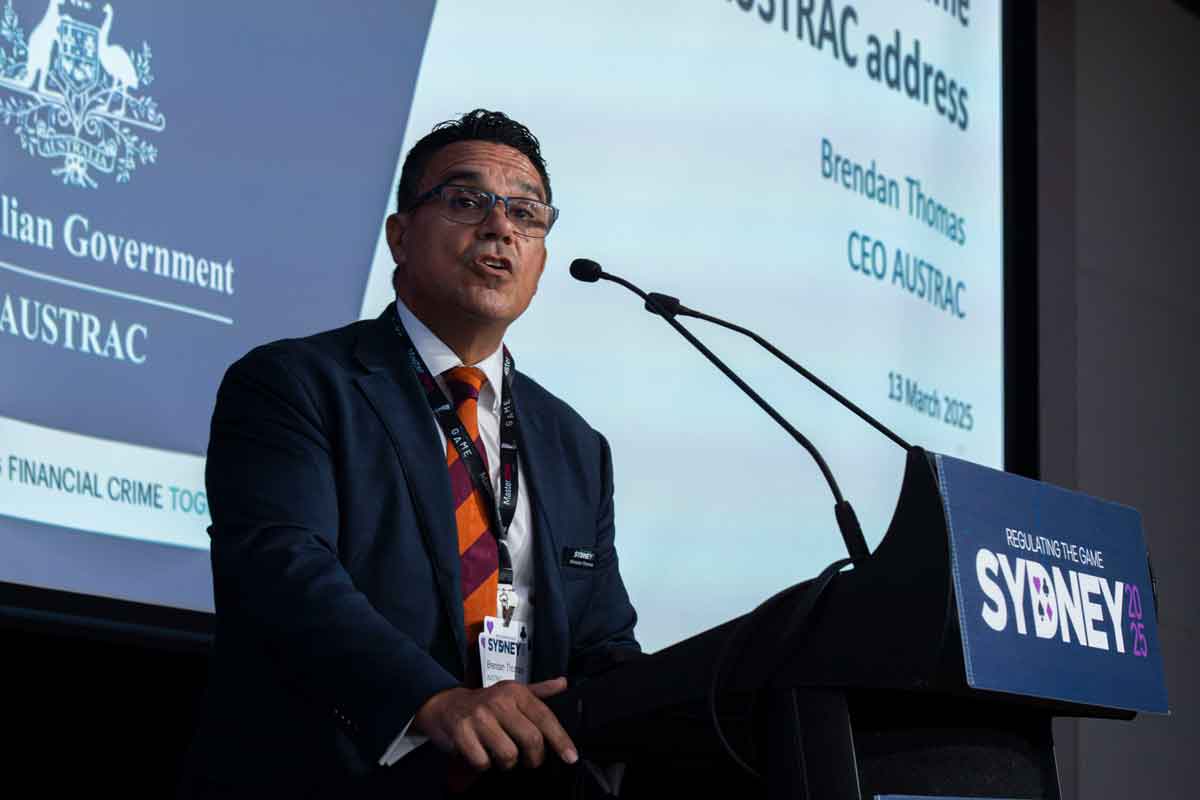

The CEO of Australia’s AML watchdog AUSTRAC says he never believed Star Entertainment Group’s argument that a penalty of more than AU$100 million (US$70 million) for historical anti-money laundering compliance failures would send the casino operator broke.
He does, however, feel that the “corporate disaster” Star has endured in recent years has likely caused “irreparable reputational damage” – even as the company shows signs it is gradually clawing out of its financial hole.
In comments to mainstream local media outlet Australian Financial Review, Brendan Thomas expressed satisfaction with the outcome of the civil penalty case AUSTRAC brought against Star in 2022, with the Federal Court last week ordering the casino firm pay AU$260 million – an even split between the AU$100 million Star had argued for and the AU$400 million (US$280 million) sought by the regulator.
“We never bought the argument that Star ran that the fine was going to send them broke. I think that that’s been proven to be right, but that’s a matter for the court to reflect on,” Thomas told the AFR.
Describing the penalty as “a very strong outcome,” he added, “Our case has been running for four years and during that time, [Star’s] share price has been rock bottom, the people involved in running the company have been through separate proceedings and I’d say they’ve had irreparable reputational damage done to them because of their involvement in this. It’s a tale of a corporate disaster.”
While Thomas noted that Star’s behavior was “egregious,” he expressed confidence that the action AUSTRAC had taken against Star and fellow Australian casino operator Crown Resorts – which previously agreed a AU$450 million (US$316 million) penalty for similar breaches – had achieved positive results.
Both companies now have new ownership and revamped executive teams, while the Asian junkets that once brought billions into Australia via its casinos are no longer a factor, either because legislation now prevents their presence or because many of them have since collapsed.
“There was a big element of the money that was coming through the large Australian casinos. That’s not coming in in the same way, which is a good thing,” Thomas told the AFR, adding that criminals were now looking for other means to launder money.
“The more we focus on closing down these channels, the more it’s kind of channelling them into smaller and smaller areas for them to be able to move their money. And that’s the idea; to make it harder, slower, more expensive for them to launder money through fewer channels.”
RelatedPosts