




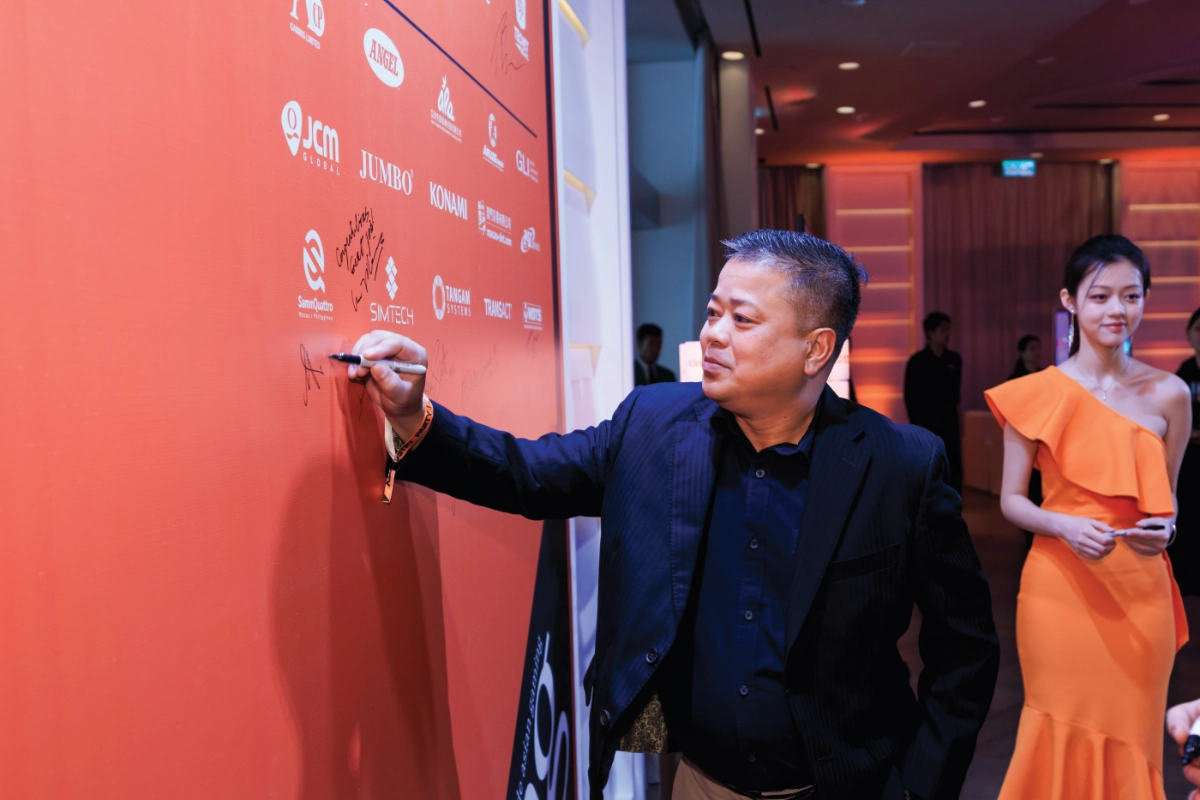

Sabri Jaafar, founder of gaming equipment distributor and consultancy SammQuattro, details his journey from growing up in Malaysia to traveling the world fulfilling his fascination with electronics.
BB: Thanks for speaking with IAG, Sabri. Can you tell us a bit about your background and your memories of growing up?
SJ: I had a wonderful childhood growing up in Malaysia. Most of my free time was spent outdoors with friends – catching fish in the paddy fields, swimming and rafting in the river, climbing trees and creating our own adventures.

Looking back, I realize those experiences shaped who I am today. They taught me to be curious, resourceful and resilient. I loved building things, modifying my bicycle and taking toys apart just to understand how they worked. That natural curiosity eventually became the foundation of my career.
I was also quite competitive. Whether it was school, sports or hobbies, I always wanted to improve. More importantly, I learned that success comes from persistence rather than talent alone.
BB: What were your main interests when you were young. Did you have any dreams of what you wanted to do for a career?
SJ: From an early age I was fascinated by electronics and how things worked. Whenever a new device appeared, I wanted to understand what was inside rather than simply use it.
That interest led me to study Electronics Engineering, because I imagined a career in the electronics manufacturing industry. At the time, I never expected those technical skills would eventually take me into gaming. Even today, I still enjoy solving problems. If something breaks at home, I’m usually the first person to try fixing it before calling for help.

BB: So, it’s no surprise that your career now revolves around technology.
SJ: Absolutely, although what has always interested me isn’t technology for its own sake – it’s the way technology solves real problems.
Throughout my career I’ve enjoyed seeing engineering, electronics and software come together to improve operations and create better customer experiences. Today, technologies such as AI, automation and data analytics present exciting opportunities, not because they replace people but because they help people make better decisions.
BB: How did you first get into the gaming industry specifically? Was it love at first sight?
SJ: It really was. I still remember walking onto the slot floor for the first time. My engineering instincts immediately took over – I was more interested in understanding how the machines worked than playing them.
What began as a technical role quickly became a passion. Joining Resorts World Genting changed the direction of my career and opened opportunities I could never have imagined, from helping launch world-class integrated resorts to leading international teams and eventually founding my own company.

BB: What are some of the key lessons you learned early on that have helped shape your career?
SJ: My early years at Resorts World Genting were both demanding and formative. During periods of expansion, we often worked long hours installing, relocating and commissioning gaming machines. Those experiences instilled in me the values of discipline, teamwork, resilience and accountability.
I also learned that meaningful success is never achieved alone. Every successful project depends on people who trust one another, work toward a shared goal and are willing to step up whenever needed. Strong teams, not individuals, deliver exceptional results.
Those early years shaped my work ethic and leadership philosophy. They taught me that success is rarely about talent alone – it comes from consistency, a commitment to continuous learning and the humility to never consider any task beneath you. Those lessons continue to guide me throughout my career and as an entrepreneur.
BB: You have worked both on the operator and the supplier side. What are the unique challenges of each?
SJ: Working on both sides has given me a perspective that I value enormously. As an operator, your priority is delivering a reliable, seamless guest experience. You’re thinking about uptime, operational efficiency, compliance and profitability.
As a supplier, your responsibility is broader. You need to understand the different needs of multiple customers while delivering products, service and innovation that genuinely improve their operations.
One lesson has stayed with me throughout my career: operators don’t buy products – they invest in solutions. Before introducing any product at my company, SammQuattro, I still ask myself, “If I were the customer, would I buy this?” If the answer isn’t yes, we haven’t created enough value.
I believe that’s the difference between being a vendor and becoming a trusted partner.
BB: What led you to found SammQuattro, and what can you tell us about the company?
SJ: After nearly 30 years in the gaming industry, I reached a point where experience became responsibility.
I’d been fortunate to contribute to the opening and operation of some of Asia’s leading integrated resorts, and I wanted to apply those lessons in a different way. Rather than simply supplying products, I wanted to build a company that understands the challenges operators face, because we’ve experienced them ourselves. We know that reliability matters. We know downtime costs money. We know responsiveness builds trust. Those aren’t marketing slogans – they’re lessons learned from decades on the gaming floor.
The COVID-19 pandemic also gave me time to reflect on what I wanted the next chapter of my career to look like. It reminded me that opportunities don’t wait forever and if I wanted to build something meaningful and leave a lasting contribution to the industry, I needed to take that step.
Today, SammQuattro is built around a simple philosophy: deliver innovative, reliable and practical solutions while building long-term relationships with our customers. I don’t measure success simply by revenue. I measure it by the trust we earn and the partnerships we build.
People often ask whether starting my own company was the biggest risk of my career. I don’t see it that way. For me, the bigger risk would have been reaching retirement wondering, “What if I had tried?” I didn’t want to spend the rest of my career wondering what might have been.
BB: How have you found running your own business versus working for a large organization?
SJ: Working in large organizations taught me discipline, structure and the value of continuous improvement. Running your own business, however, teaches you accountability.
Every success is deeply rewarding but every mistake is yours to own. That reality keeps you grounded, humble and committed to becoming better every day. The greatest difference is that you’re no longer executing someone else’s vision – you’re creating your own. Every customer relationship you build, every employee you hire and every business decision you make reflects your values and leadership.
For me, entrepreneurship isn’t about having more freedom. It’s about embracing greater responsibility, making meaningful decisions and creating lasting impact.
 BB: What does a typical day in the working life of Sabri Jaafar look like?
SJ: No two days are ever the same, which is one of the things I enjoy most. I like to begin by reviewing priorities before meeting customers or working with my team. Spending time with customers tells you where the market is heading, while spending time with your team tells you whether your business is ready for it.
I also make time to think strategically. Leadership isn’t simply about making decisions – it’s about asking the right questions and preparing your organization for tomorrow.
BB: Who would you say has been the most influential person in your life?
SJ: Without question, my parents. My father was an entrepreneur, and growing up I watched him build his business through hard work, determination and resilience. He taught me that if you’re prepared to take calculated risks and work hard, you can create opportunities for yourself rather than waiting for them.
My mother taught me equally important lessons. She always reminded us to be kind, generous and fair to everyone, regardless of who they were. She believed that character matters more than status, and that’s a lesson I’ve carried throughout my career.
As I grow older, I appreciate even more the sacrifices my parents made for our family. Much of what I’ve achieved is built on the values they passed on to me.
Looking back, I realize my father taught me how to build a business, while my mother taught me how to build relationships. Both have shaped the person I am today.

BB: Your job requires a fair amount of travel around the world. Do you have a favorite destination, be it for work or pleasure?
SJ: Whenever I visit Thailand, it feels less like traveling and more like coming home. With both Malaysian and Thai heritage in my family, I’ve always felt a deep connection to the country, its culture and its people.
Although my work has taken me to many countries, Thailand has always felt uniquely familiar. There is a warmth and authenticity that makes every visit special. Whether I’m reconnecting with family or traveling for business, I always look forward to being there.
One of the highlights of every trip is the food. From world-class fine dining to humble street food stalls, Thailand offers some of the best cuisine in the world. In fact, I never leave without enjoying authentic street food – it’s an essential part of the experience.
BB: What do you like to do outside of work to relax?
SJ: Family always comes first. I enjoy travelling with my wife and children whenever I have the opportunity. Some of our best memories have been created simply by exploring new places together.
I also enjoy fishing. It’s completely different from the pace of business and gives me the opportunity to slow down, think and appreciate nature.
Another passion of mine is reading. I believe learning should never stop, regardless of your age or position. I also encourage my children to develop the same habit because books expose us to new ideas and different perspectives.
Ultimately, spending quality time with family helps keep everything in perspective. Business is important, but it’s the people closest to us who remind us why we work so hard in the first place.
Fishing and reading may seem very different, but they have something in common. Both require patience. One teaches patience through nature. The other teaches patience through knowledge.
Those moments remind me that while business is important, life is ultimately about the people we share it with. Success means very little if you don’t have family and friends to enjoy it with.













