
While most of the industry’s attention is fixed on Wynn Al Marjan Island and the gaming licenses set to reshape the United Arab Emirates (UAE), the logistics infrastructure that will physically deliver these multi-billion-dollar properties is already in motion. BCI Worldwide reflects on the company’s expansion into the Middle East.
When BCI Worldwide first set foot in Macau in 2010 to support the Sands Cotai Central project, the integrated resort industry across Asia was entering one of its most ambitious construction cycles in history. Sixteen years on, BCI has become a quiet but indispensable part of how flagship properties get built – handling the warehousing, consolidation, on-site staging and white-glove installation of furniture, fixtures and equipment for landmark developments operated by Sands China, Sands Singapore, MGM, Four Seasons and Marina Bay Sands.
 Today, that same expertise is being applied 6,000 kilometers west of Cotai. BCI’s UAE operation – operationally active for 18 months, even as our public-facing presence catches up – places us firmly inside the UAE’s emerging integrated resort story.
With Wynn Al Marjan Island currently scheduled to open in Spring 2027 and the United Arab Emirates preparing to host the Middle East’s first regulated commercial casino, the FF&E logistics window is open right now. The properties making headlines in 2027 are the ones whose containers, crates and crews are already being scheduled in 2026.
Leading that effort is Alan Field, who joined BCI as Managing Director for the UAE and set up our regional office in Dubai. Alan’s background is genuinely rare in this market: a track record that spans Mohegan Gaming & Entertainment on the integrated resort side, ultra-luxury hospitality development with Range Developments and over two decades of construction and project delivery experience across Dubai, Abu Dhabi and the wider Middle East with firms including AtkinsRealis and KBR. Few executives have lived both halves of this equation – the IR procurement and logistics discipline that operators expect and the ground-truth realities of building in the region.

What we have learned across Macau, Singapore, Manila, Hong Kong and Bangkok translates directly to this market. An integrated resort is not a hotel with a casino attached; it is a hyper-coordinated assembly of millions of individually procured items – from custom millwork and hand-tufted carpets to gaming furniture and the back-of-house infrastructure guests never see. Compress that across thousands of suppliers, dozens of countries and unforgiving handover dates and you have a logistics problem few operators are equipped to solve alone.
The Middle East market adds its own layer: ambient temperature considerations for moisture-sensitive finishes, culturally considerate scheduling, customs regimes that differ markedly from Asia’s free ports and a regional contractor base still being built out. Our business model was developed precisely for environments where flexibility and cost predictability matter as much as raw capacity. Alan’s regional knowledge is what turns that model into something operators in Dubai, Ras Al Khaimah, Abu Dhabi and beyond can actually rely on.
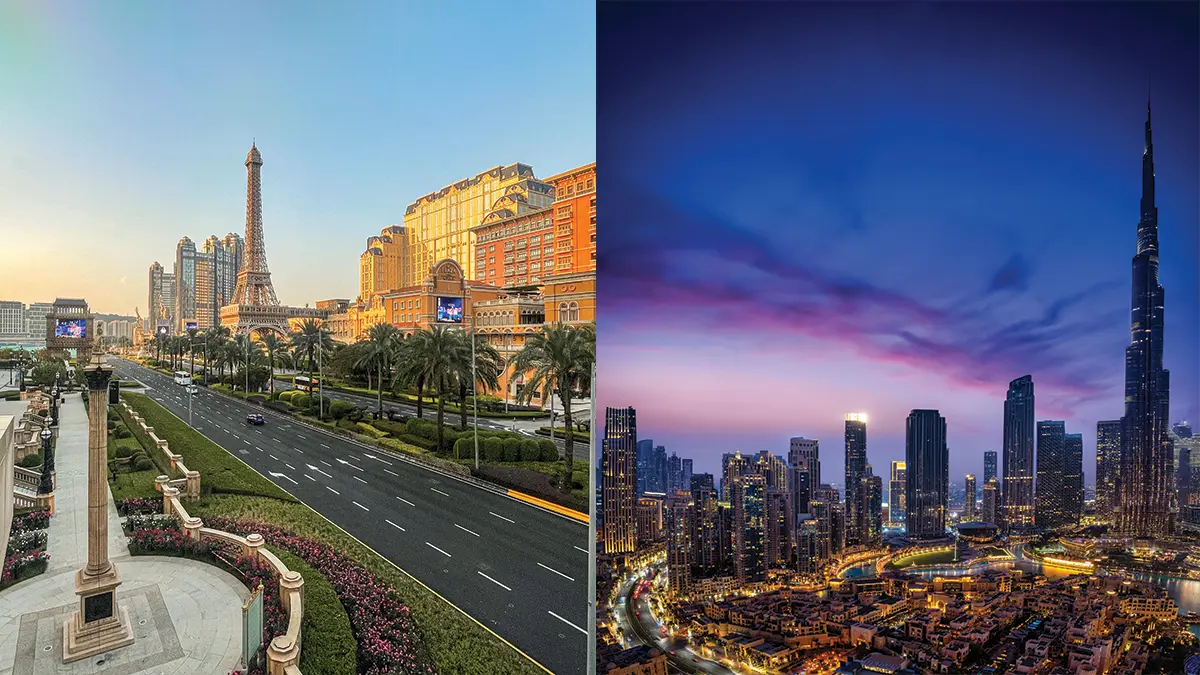
 The UAE, in many ways, is where Macau was around 2008: enormous in ambition, light on regional precedent and rewarding to those who arrive prepared. The next 18 months will be defining – not only for Wynn Al Marjan Island but for every operator quietly evaluating their own UAE strategy. For those conversations, Alan and his UAE team are ready now.