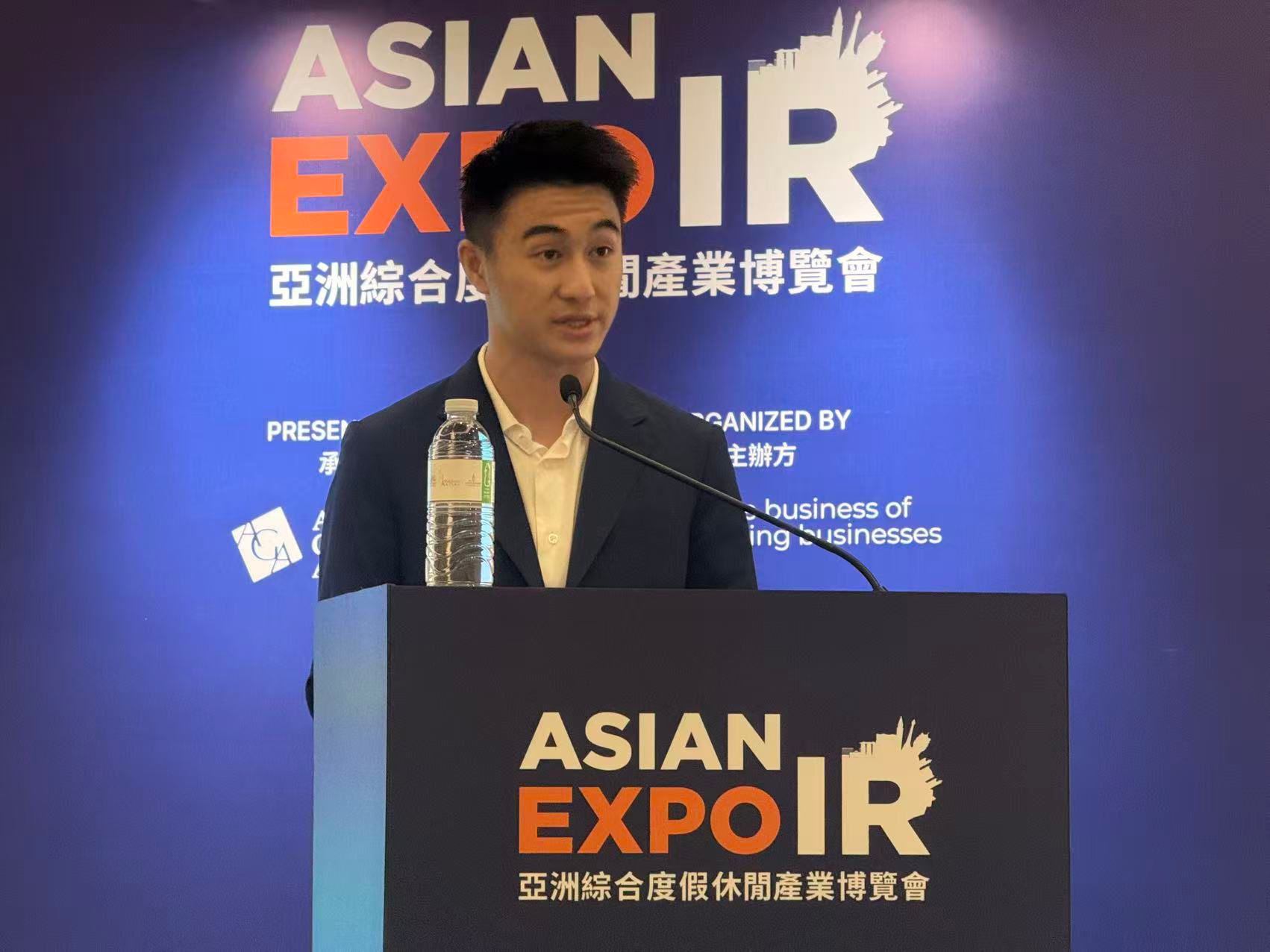

Mario Ho – son of the late Stanley Ho, Chairman of NIP Group and co-owner of the NBA’s Boston Celtics – says Macau must pivot from its traditional gaming roots toward a “Sports Plus” model to capture the next wave of global tourism and youth culture.
Delivering a Keynote Address at the Asian IR Expo on Thursday, part of the broader G2E Asia gathering at The Venetian Macao, Ho called for a radical shift in Macau’s economic identity and emphasized sports as a “global language without borders” – pointing to how fans across regions connect through shared moments. He argued that esports is now a leading force in global youth culture, built through digital platforms, livestreaming and arena events.
“Sports breaks down barriers that politics, business and traditional media simply cannot,” he stated. “What Macau needs now is conviction … to reduce our dependence on traditional gaming as a single engine of growth.”
Ho framed global sports events as one of the most effective drivers of high-value inbound tourism, naming the FIFA World Cup, the Olympics, Formula One, the Super Bowl and international esports tournaments as examples that “fill hotels,” boost retail and dining, and elevate host cities on the world stage.
He also pointed to cities such as Shanghai, Singapore, Abu Dhabi, Riyadh and Las Vegas as places that have used sports investments to reposition themselves through long-term planning.
Turning to Macau, Ho argued the city already has major advantages: integrated resort infrastructure, high-end hospitality capacity, cross-border connectivity, policy support and a central location within the Greater Bay Area, being within a four-hour flight of “more than two billion people.” What is needed now, he said, is “conviction” to diversify beyond traditional gaming.
Ho said future integrated resorts should evolve into broader industrial platforms that combine professional sports arenas, esports studios, cultural and exhibition spaces, and innovation hubs in a “data-connected” environment.
He also called for coordination among governments, investors, technology partners, sports operators, and integrated resort operators to build a “sports plus culture, plus tourism, plus technology ecosystem” that can define the next era of the Asia-Pacific sports and entertainment economy.
“The question is no longer when Asia will lead the next decade of global sports. The real question is, which city and which operator will move first?” Ho said. “This is a shared responsibility. Governments, investors, technology partners, sport operators, and IR operators, we all need to come together. The opportunity is clear.”