
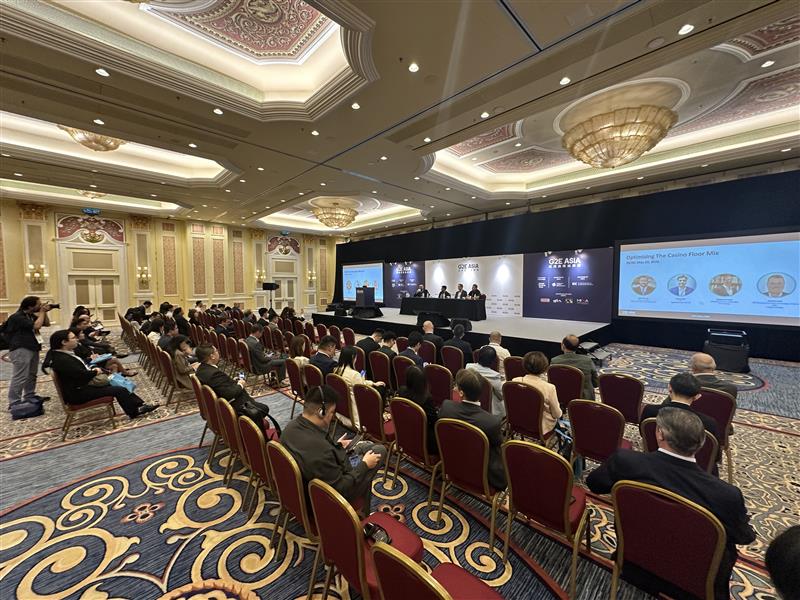

Smart tables have changed the game for casino floors, but collecting the data is merely the first step. A top panel of experts at G2E Asia said Wednesday that betting itself isn’t shifting drastically, but that the data from player behavior is game changing.
“Traditional tables are marred by inefficiency, and now you have the data that was lost before,” highlighted Aaron Raj, Chief Technology Officer (CTO) of Angel Australasia. “There’s an era before smart tables and an era after smart tables, and we’re still building on where we want to be.”
Clayton Peister, Managing Director of Hex Gaming, noted that “the matchbook of tricks hasn’t changed … I think operators need to rethink the wiring underneath how to utilize this data.”
The expert furthered, “most operators are still built around a very query-centric format that’s not indifferent from 20 years ago … they need to change the wiring so it’s more akin to e-commerce, so that we have this transactional streaming data. We can make decisions on that and then all of a sudden we can have real time actions: marketing, pursuit, gamification.”
David Croft, General Manager Product & Strategy for Tangam Systems, added that with smart tables, aside from evaluating the gameplay itself, the focus can turn to the customer.
“The really interesting part is still yet to come, and that’s about our understanding of the customer, seeing who we’re under-investing in, over-investing in, what players prefer side bets … and what to do with that.”
Part of this is also using biometrics from facial recognition on the smart tables to study behavior, noted Raj, helping operators to make decisions based on “snapshots and data you want to focus on,” allowing them to “act even before the player is walking away from the table.”
The three experts agreed that maximizing the player experience is key for the success of the casino floor itself – maintaining the “buzz” factor on the floor through strategies that can even seem contradictory – such as larger spacing between slot machines – something brought about during the pandemic but which has seen lasting value.
But the casino floor is in need of “future proofing,” noted Peister, highlighting that “the business (is) a lot more concentrated amongst hardcore gamers.”
He further explained that “online is probably underappreciated,” suggesting that operators should “be more digital,” rethink their apps, increase gamification and, if possible, become omni-channel. While there’s “not a ton of crossover play, it works really well in terms of creating a more encompassing experience … for the people that you already know.”
This furthers the idea of building hype and excitement around the overall gaming experience and keeping players at the tables and slots, enjoying the entertainment and giving operators more and more data to study.
RelatedPosts