
Inside Asian Gaming spent a day with the FBM Philippines team to learn about its decision to set up home base in the Philippines, how it continues to serve the local e-bingo market and why it is now expanding into traditional slots.
Founded in Portugal but now firmly entrenched in the Philippines, industry supplier FBM is a living embodiment of the increasingly important role Asia now plays in the global gaming ecosystem.
Having originally established bases in Europe and Latin America, the company first set a tentative foot into the Philippines around 2002 before opening its factory in Subic Bay, north of Manila, in 2010. Today, that factory not only services FBM’s growing Asian customer base but also functions as its one and only factory globally – representing a seismic shift in how FBM views its place in the world.
 “Up until 2010, we were importing machines from Brazil and from other places where we had operations, but during that time we realized how important it was to develop products that better reflected the reality of our players,” recounts Pepe Costa, FBM’s Country Manager, Philippines.
“By manufacturing our machines here as the Philippines became an important market for us, we were able to tailor fit products to the Philippine market which is something many companies struggle with. For some companies, when they try to enter the Filipino market, they are not able to succeed in the same way that they succeeded elsewhere.
 “In our case, we were able to penetrate the bingo culture in the Philippines, and the company has grown in that market, in that segment, ever since. That’s why we have 30,000-plus machines in the market today.”
As a dominant player in the Philippines’ e-bingo sector, FBM is the primary supplier to more than 500 bingo halls nationwide – a handful of which it owns outright – and has in recent years begun expanding into traditional slot machine offerings with a small presence in some of Manila’s integrated resorts. It is also a prominent supplier in Europe and Latin America, primarily in regard to video bingo.
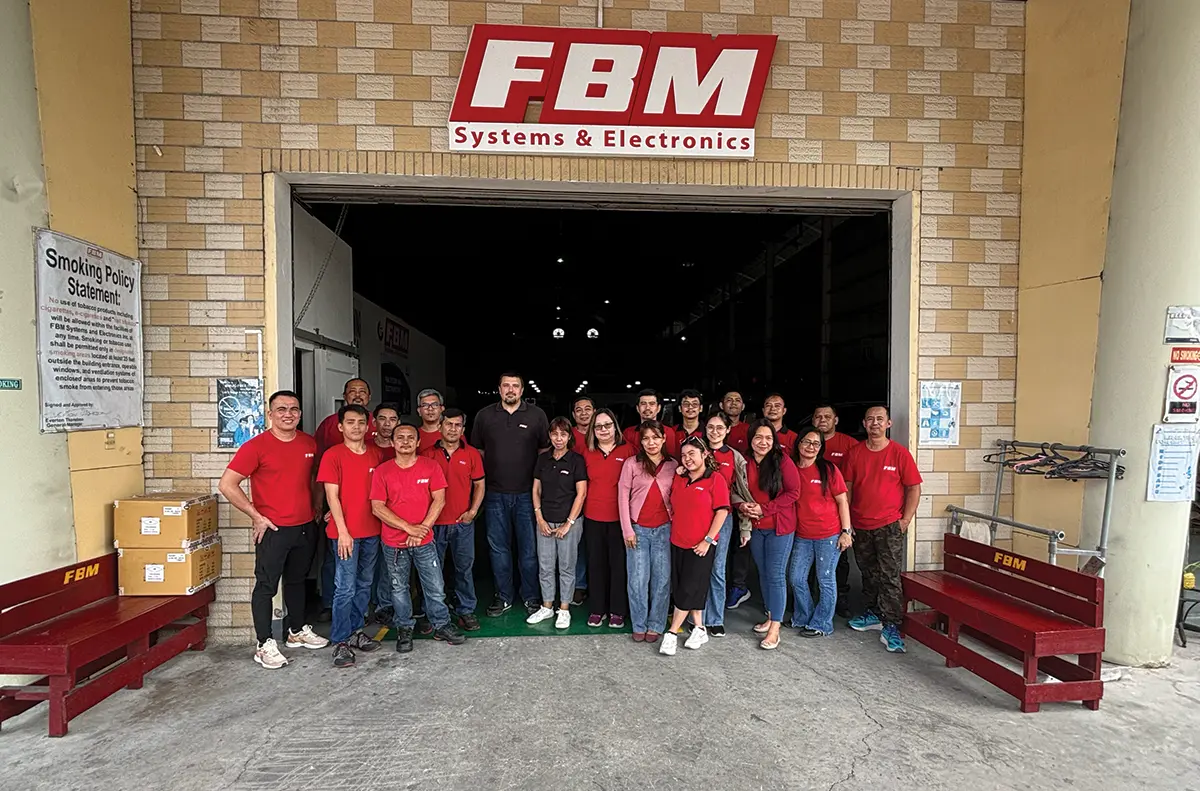
Yet it is the Philippines that has become the company’s central production base, with around 800 staff nationwide including 30 in the factory in Subic.
 “We produce machines for all of the countries that FBM operates in, so it’s not only for the Philippine market but exporting machines from here,” explains Everton Thonebon, General Manager at FBM Systems and Electronics and the man who oversees FBM’s production facility.
“All of the concepts and the development of the machines are done here in the Philippines as well. We start with the concept design that is required by our clients and based on that design we develop all of the mechanisms needed to make the machine, from the drawings to the final product, including all the internal parts. It’s all made here in the Philippines, and we can produce around 1,000 machines per month at full production.”
For Thonebon, the fact that FBM not only produces in-country for the local market but also counts the Philippines as the company’s international base serves as a source of pride for its employees.
 “They are very thankful because we’re giving them the opportunity, we’re giving them all the knowledge, we are training them and they give it back to you,” he says. “I think that’s the biggest advantage to having our products produced here – that they are all so proud. When they see that we are loading a container to send what they have produced to another country, you can see how proud that makes them feel.”
FBM’s Philippines focus has extended further in recent years, with the company adding a third software house, based out of its Manila office, in addition to existing houses in Portugal and Brazil.
Given the Philippines’ expansive BPO (Business Process Outsourcing) industry, bringing the company’s localized software development in-house was a logical next step and has further eased some of the challenges that international suppliers often face.

“We already had our own factory and our own logistics – our own trucks – so now with our own software house, even the games running in the machines are developed using the same mentality of being truly local,” says Costa.
“We are also taking the same approach to marketing because post-pandemic we realized our messaging was a little bit far from the reality of the country with basic things like culture, trends, even sense of humor. I’m sure the jokes in Macau are completely different than the jokes in the Philippines.
“I used to say to my bosses that we had a Brazilian guy translating his thoughts into English and then having someone translate that to Tagalog. When I saw the result I would think, ‘Oh man, this is terrible!’ You can’t think in one language and translate it literally into another – it doesn’t work. So, now that we are bringing all of that here, the results are just infinitely better.
 “From the factory to the office to the marketing to the software house, it’s all about acting locally and I think that’s really the best recipe.”
While bingo remains FBM’s winning ticket, the company has more recently begun delving into the slots market and is tentatively exploring the Philippines’ regulated online space too.
On its slots ambitions, Costa explains, “It’s not easy because in the same way that we are a big company in bingo, there are lots of big companies in slots, so for us it’s like David versus Goliath. Nevertheless, I think our products, our slot machines, are on the same level as the others.

“It still requires a bit of fine tuning, but we would like to enter and become stronger in the casino industry. We already have some machines in Solaire and there are several other requests for us to provide machines, even from PAGCOR. It’s a new market for us but we do want to become bigger in the casino industry.
“We also have a PIGO license and while there are many challenges, we can’t simply close our eyes to the online industry. People are a lot more mobile oriented today and if we want to continue to grow, continue to consolidate our games, our products and continue to promote entertainment, I think that’s the way to go.
“So growing into those two segments, the online and the casino industry, will be a vital part of our future.”