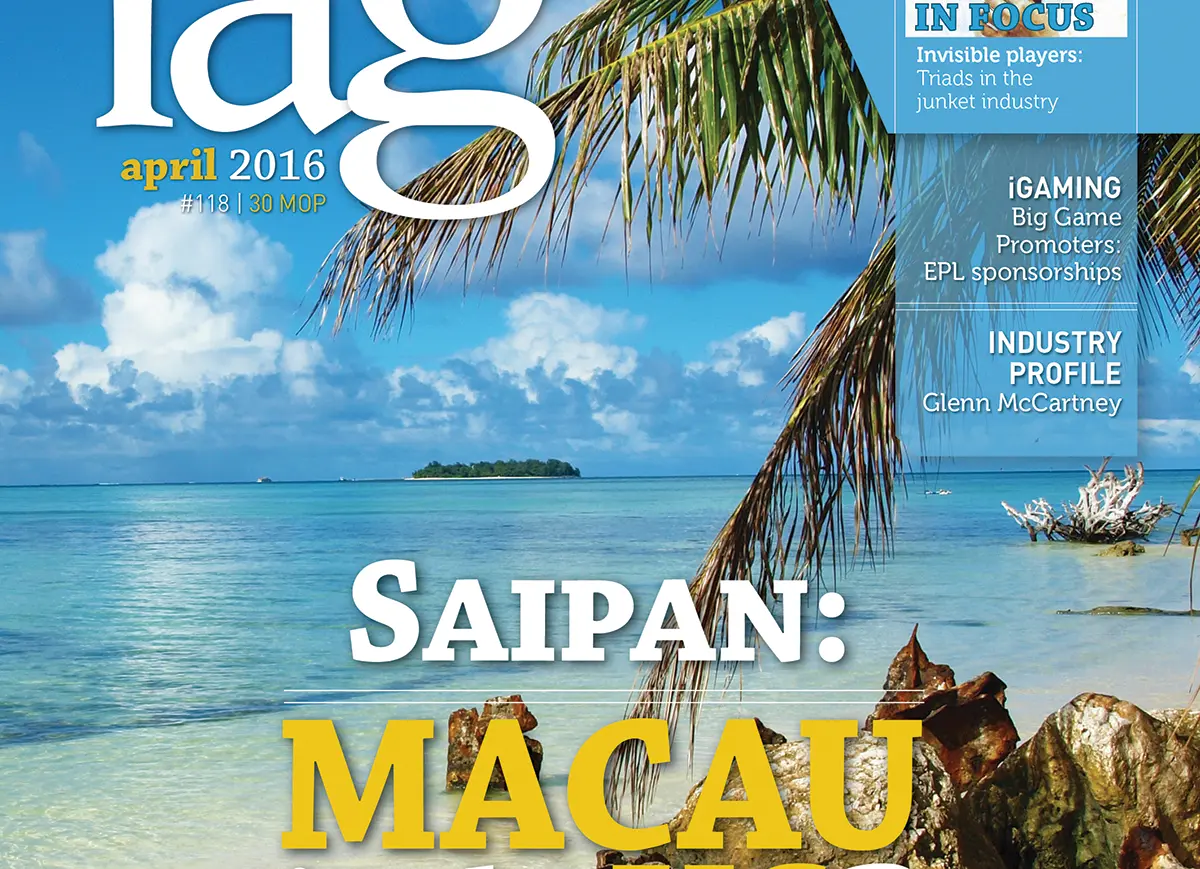

In this regular feature in IAG to celebrate 21 years covering the Asian gaming and leisure industry, we look back at our cover story from exactly 10 years ago, “A Macau style casino in the US?”, to rediscover what was making the news in April 2016!
By now, the long and sordid story of Imperial Pacific International and its failed Saipan integrated resort venture has become the stuff of legend. And yet, for all the legal and regulatory challenges that surfaced in the years leading up to the project’s demise, it is easy to forget that the company barely dipped a toe in the island’s turquoise waters on its original – and some would say absurdly ambitious – development plans.
 In April 2016, Inside Asian Gaming sat down with former Wynn and Las Vegas Sands executive Mark Brown, then President of IPI subsidiary Best Sunshine, to learn more about what the group was envisioning for this tiny Pacific outlier.
According to Brown, IPI – a company born out of former Macau junket Hengsheng Group – and its investors wanted to pour more than US$7 billion into Saipan, developing its own version of Macau’s Cotai Strip with nine casinos, 11 hotels, villas, homes, condos, the largest water park in the world and extensive retail.
The “how” on achieving such a dream has never been fully explained, although Brown told IAG in 2016 that only part of this investment would come directly from IPI. The rest, he said, could come via partnerships with other gaming and hotel operators from around the world – each building their own piece of “paradise” along Saipan’s new tourism strip.
 His confidence was driven by the phenomenal gaming numbers that IPI’s temporary casino facility, Best Sunshine Live, was reporting at that time. Opened in 2015 in a shopping mall, the casino in just five months of operations that year generated gaming revenue of HK$707 million (US$91.2 million) and adjusted EBITDA of HK$121 million (US$15.5 million). November through February monthly VIP roll averaged US$1.82 billion, according to the company’s own figures.
IAG notes that Best Sunshine went on to report a whopping US$32.4 billion in rolling chip turnover in 2016 – raising significant questions over their accuracy given that The Venetian Macao reported only US$31 billion in rolling chip turnover during the same period.
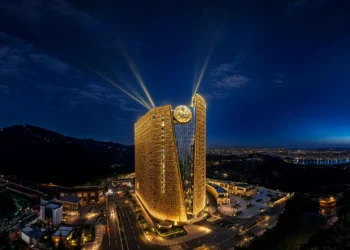
Still, Brown was confident in the company’s growth plans, which began with the development of its first casino and hotel on a site occupied by the aging Mariana Resort. The idea was to develop an initial US$500 million to US$600 million property with between 400 and 500 slot machines, 250 to 300 table games and 374 suites. This was the building that would later become known as Imperial Palace Saipan.
 A second property with 1,000 rooms and at a cost of US$1 billion was to follow – although the history books show that IPI’s dream never came close to reaching this stage.
Imperial Palace Saipan opened its casino in 2017, however, its hotel and villas were only partially completed when COVID struck in 2020. A year later, having fallen well behind on its annual license and regulatory fees, IPI’s casino license was suspended.
The years since saw a seemingly never-ending string of claims from creditors, enforcement efforts by the Commonwealth Casino Commission and delaying tactics by IPI in an effort to avoid having its license revoked. IPI filed for bankruptcy in 2024, owing more than US$100 million in unpaid fees to the government.
Despite these years of drama and the auctioning of many of IPI’s Saipan gaming and other assets to pay back creditors, questions still remain over what will become of the Imperial Palace site.

In August 2025, a recently incorporated entity called Team King Investment (CNMI) LLC, won a bid to acquire the casino assets of Imperial Pacific International for US$12.95 million. The deal saw Team King take hold of IPI’s core assets, including its stalled hotel development, a leasehold interest on almost 20,000 square meters of land and an option to acquire IPI’s casino license. It remains unclear to this day if Team King plans to resume development of the property, with cost requirements to complete IPI’s original plans estimated at around US$150 million.
There are also allegations that Team King boasts insider links to IPI. It is notable that the only other bid in last year’s auction was from an individual with known ties to Ji Xiaobo – the son of IPI founder and majority shareholder Cui Li Jie.
Clearly the story of Saipan’s casino dream is not finished yet.