
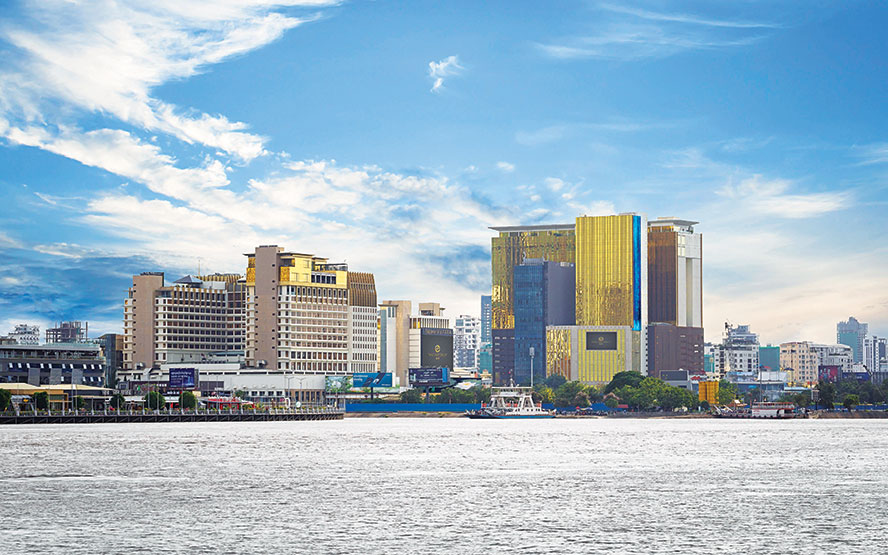

NagaCorp may be looking to significantly reduce the size and scale of its upcoming Naga 3 expansion project at NagaWorld in Phnom Penh, Cambodia, but the development remains “strategically important” to the company’s future according to ratings agency Moody’s.
Analysts have recently outlined their expectation that NagaCorp will cut by half the initial US$3.5 billion it planned to spend on Naga 3, having in December cancelled a US$1.75 billion share subscription agreement with its controlling shareholder that was to fund half of the project. This followed the company previously postponing the development by four years due to economic challenges posed by the COVID-19 pandemic.
In a credit opinion issued this week, Moody’s said that, despite the withdrawal of promoter funding, “we view Naga 3 as strategically important to reposition the group toward a more integrated resort model” – even if it is to be materially downsized from its original scope.
It added, “We nevertheless expect funding risks to remain manageable, reflecting the likely reduction in project scale and NagaCorp’s strong financial flexibility. The company intends to rely primarily on internally generated cash flows to fund this project. Importantly, NagaCorp retains flexibility over the pace and timing of expenditure, with no binding completion deadline.
While the absence of a revised budget introduces some uncertainty, we expect NagaCorp to maintain a conservative financial policy – including restrained dividend distributions – to preserve balance sheet strength and support internally funded capital spending.”
Naga 3 aside, Moody’s said it expects NagaCorp to report EBITDA of around US$400 million for FY25, up from US$292 million in 2024.
The company’s much improved financial position from a year earlier is, the ratings agency explained, underpinned by a “resilient and relatively sticky customer mix” alongside sustained foreign direct investment (FDI) inflows into Cambodia.
“The company’s customer base is largely drawn from the Chinese expatriate community in Phnom Penh, reflecting China’s position as Cambodia’s dominant source of FDI. Continued FDI inflows should support higher visitation from business travelers and expatriates, underpinning further earnings growth.
“As a result, we expect NagaCorp’s credit metrics to remain strong, supported by low leverage.”
RelatedPosts