
Australia’s Federal Court has found that former Star Entertainment Group CEO and Managing Director Matt Bekier and former Chief Legal & Risk Officer Paula Martin breached their statutory duty under the Corporations Act by failing to exercise due care and diligence in their dealings with Asian junket operator Suncity Group and regarding transactions with the National Australia Bank.
However, in a lengthy 500-page ruling handed down Thursday morning, Justice Michael Lee said the Australian Securities and Investments Commission (ASIC) – which first brought the civil penalty proceedings against 11 Star directors and officers back in 2022 – had failed to prove breaches against seven other former directors and executives, including former Chairman John O’Neill. Two of the persons originally named in the case, former CFO Harry Theodore and former Chief Casino Officer Greg Hawkins, previously settled.
The long-running proceedings related to allegations by ASIC that Star’s board and executives failed to give sufficient focus to the risk of money laundering and criminal associations that are “inherent in the operation of a large casino with an international customer base”.
These included claims that former Star board members – namely O’Neill, Bekier, Kathleen Lahey, Richard Sheppard, Gerard Bradley, Sally Pitkin, Benjamin Heap and Zlatko Todorcevski – had approved the expansion of Star’s relationship with certain individuals with reported criminal links, rather than addressing money laundering risk by inquiring into whether Star should be dealing with them.
It also alleged that Bekier, Martin and Hawkins breached their duties by not adequately addressing the money laundering risks that arose from dealing with Macau-based junket Suncity and its CEO Alvin Chau, and by not appropriately escalating money laundering issues to the Board.
Suncity, which shut down in December 2021 following the arrest of Chau, was known to be Star’s largest junket at the time of the breaches, with Star’s turnover from Suncity rising from around AU$2.1 billion in 2017 to AU$4 billion in 2018 and AU$5.9 billion in 2019.

Separately, ASIC alleged that Martin and Theodore knowingly permitted misleading statements being provided to National Australia Bank (NAB) regarding the use of debit cards issued by China Union Pay at NAB ATMs located on Star’s premises. Those statements, it claimed, disguised the fact that Star was permitting CUP cards to be used for gambling, which was prohibited by China Union Pay.
In announcing his findings, Justice Lee said, “I am satisfied that a reasonable director of a corporation in Star’s circumstances, occupying the position of responsibilities of Mr Bekier, would have taken all necessary steps to ensure that other members of Star’s board were informed of [concerns] and would have taken all necessary steps to undertake inquiries and report back to the board as to Mr Qin’s (Suncity executive Qin Sixin) and Mr Chau’s probity, sources of wealth and sources of funds.”
Justice Lee also found that Bekier should have recognized risks as laid out in a KPMG junket risk information report provided to the company in May 2017 and should have presented this information to other members of the board. He similarly should have, Justice Lee said, taken action to obtain a copy of Star’s communications with NAB after viewing a warning letter about the use of Chine Union Pay cards to access funds for gambling. Star is alleged to have told NAB that the cards were being used for non-gaming transactions.
On Martin, Justice Lee said, “I do find that Ms Martin failed to exercise her powers and discharge her duties as an officer of Star with the degree of care and diligence required and therefore contravened section 180 of the Corporations Act … in relation to Sun City in 2018, Sun City in 2019 and also China Union Pay.”
Justice Lee was similarly critical of Bekier and Martin’s appearance in the witness box. On Bekier, he stated, “During the initial phase of his cross-examination, Mr Bekier presented as a generally good witness. He was responsive, made concessions and differentiated between what he could recall and the likelihood of certain events.
“However, as the cross-examination progressed … it was noteworthy how his responses grew increasingly elliptical and in some respects evasive. As time went on he repeatedly attempted to circumvent the crux of the questions asked, which ultimately led to his evidence being in some respects unconvincing, contradictory and on occasion highly improbable.”
On Martin, he stated, “Ms Martin approached cross-examination with marked caution. She considered each question at length, her answers were frequently preceded or interrupted by pauses, at times excruciatingly prolonged pauses. She was reluctant to make concessions even when they appeared obvious and concessions were often yielded only after sustained careful pressing.
“I’m satisfied that her presentation was not explained merely by caution or stress, rather her difficulty lay in maintaining positions that were increasingly difficult to reconcile with the contemporaneous documentary record or inherent probabilities. As the cross-examination unfolded, it became apparent that Ms Martin was reconstructing events in a manner that accommodated the documents where necessary, while invoking uncertainty of memory where it did not.”
However, Justice Lee found that ASIC “has not established that it’s entitled to any relief against” the other seven former directors, explaining that “the pleaded case that they each failed to exercise their powers and discharge their duties as a director with the requisite degree of care and diligence, and therefore contravened section 180 of the Corporations Act, is not made out on the pleaded case and on the evidence produced.”
With the liability judgement now handed down, penalty orders against Bekier and Martin will be outlined in a separate hearing.
ASIC has previously noted that breaches of director’s duties under section 180the Corporations Act attract a maximum penalty of AU$200,000 for each breach that occurred in the period 2017 to 12 March 2019 and AU$1,050,000 for each breach that occurred in the period from 13 March 2019 until 1 July 2020.
All 11 of the defendants originally named by ASIC in the civil penalty proceedings have since departed Star, whose future remains uncertain despite renewed efforts by its new controlling shareholders – Bally’s Corp and Investment Holdings Pty Ltd – to cut costs and boost revenues.
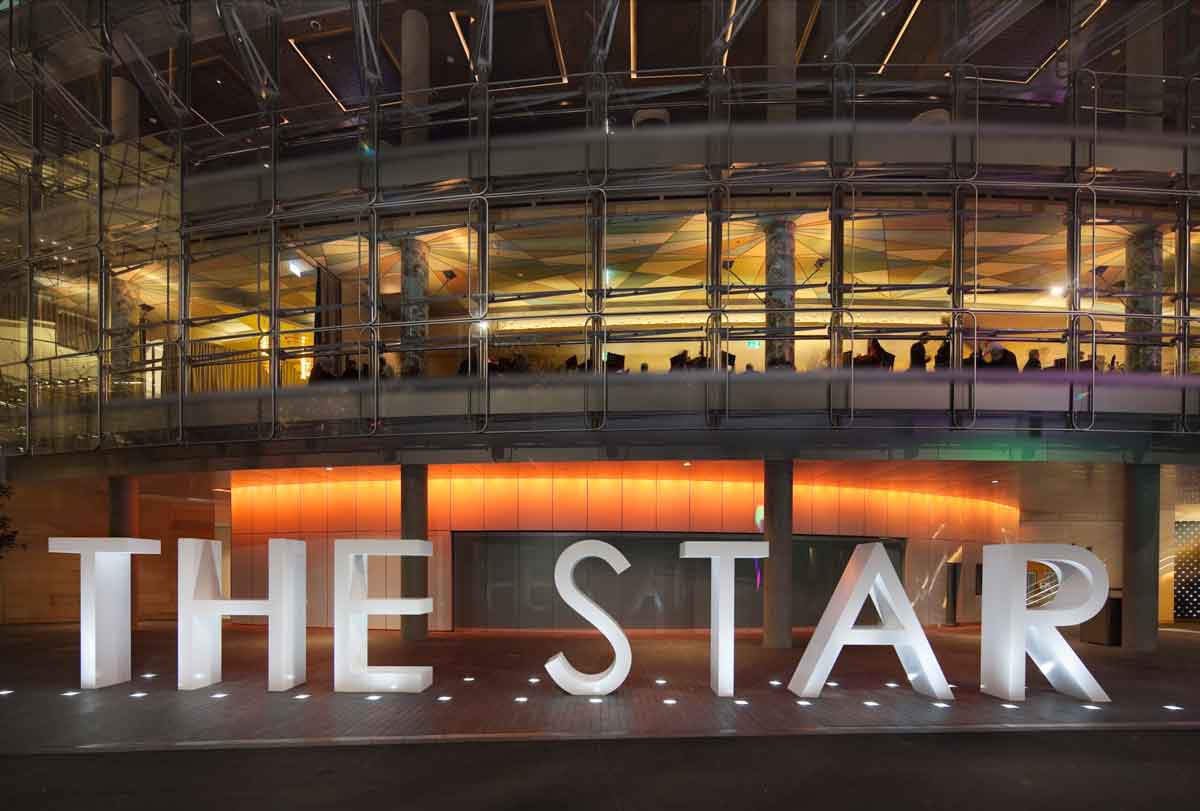
Star owns and operates The Star Sydney and The Star Gold Coast as well as owning a 50% stake in Destination Brisbane Consortium (DBC), owner of The Star Brisbane. The sale of that 50% stake to its DBC partners – Chow Tai Fook and Far East Consortium – forms part of the ongoing rescue plan.
RelatedPosts