
David Green – a former Australian gaming regulator, advisor to the Macau government and at one time a director of the State Government Insurance Corporation in Adelaide (South Australia’s largest general insurer at the time) – explores how rising sea levels could present future challenges to Cotai’s integrated resorts and proposes a possible means of damage control.
As I write, my home state of Victoria is on fire. More than 400,000 hectares of some of the most productive farming land and native eucalypt forest has been destroyed, together with more than 500 structures. Some of the fires are expected to take weeks to extinguish.
The knock-on effects to the national economy will be considerable, because while Victoria occupies only 6% of the Australian land mass, it produces around 20% of the country’s food. Accentuating the issue has been historically high cyclonic rainfall in the northern state of Queensland, with some areas recording their highest monthly falls in more than 100 years. Interesting perhaps, but what has it got to do with Macau’s gaming industry, I (virtually) hear you say? It turns out, rather a lot!
When the new gaming concessions were issued in Macau in 2022, the contracts each contained an identical Article 42, concerning insurance. Each concessionaire is required to maintain insurances covering a broad spectrum of risks, including property and casualty risks such as floods, fire, storms and so on. Policies must be held with insurers authorized to operate in Macau, or with foreign insurers approved by the government if the local options are either unfeasible or too costly.
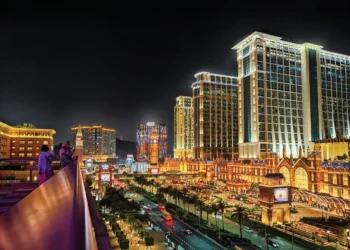
 Most of the US$50 billion plus of new investment which has taken place in Macau since 2005 has been focused on the Cotai Strip. Almost all of the land on which the Strip’s new casino resort properties have been built has been reclaimed, with the result that the land has a maximum elevation above sea level of perhaps one to two meters. In fact, carparks and other such basement structures are below sea level now.
In 2016, the journal Advances in Atmospheric Sciences published a paper which contained the following prognosis: “The rate of SLR (sea level rise) in Macau will be about 20% higher than the global average, as a consequence of a greater local warming tendency and strengthened northward winds.”
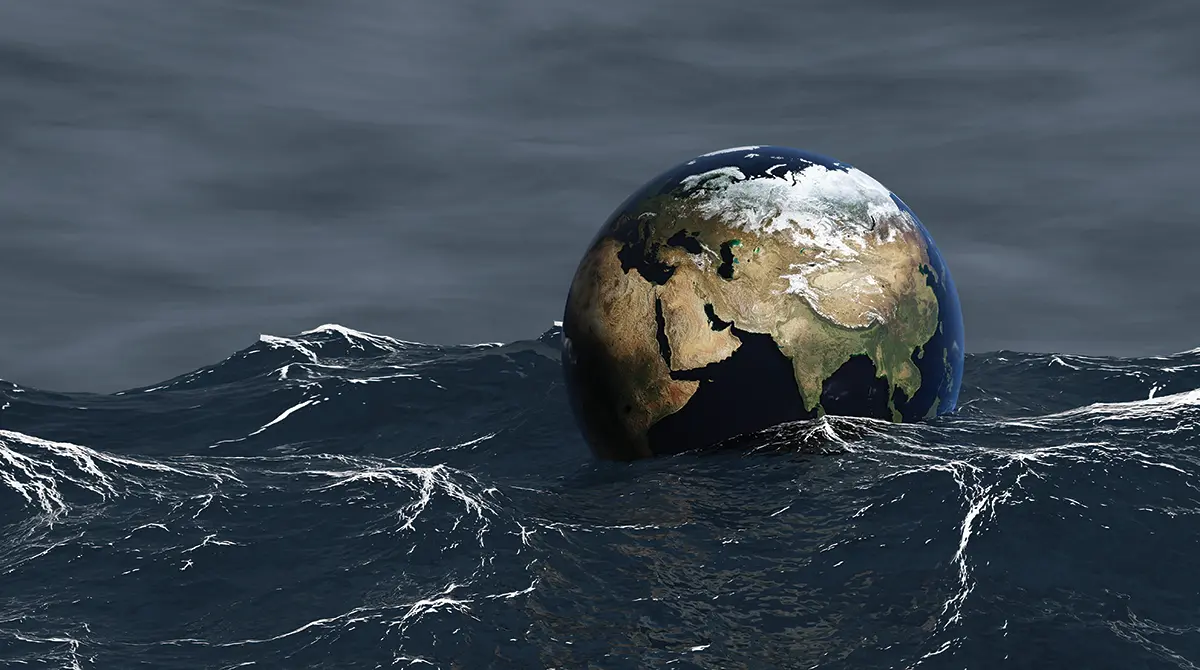
The NASA Sea Level Projection Tool developed in conjunction with the Intergovernmental Panel on Climate Change suggests that by 2030, a rise in sea level around Macau from a baseline established in the period 1995-2014 could be as much a half a meter. Whatever, it is significant!
Scientific prognoses may be dismissed as conjectural, but I doubt the naysayers would include those who lived through Super Typhoon Ragasa in 2025. Flood levels in Macau reached around 1.5 meters, casinos were ordered closed for more than 30 hours, and some casino analysts have suggested that casinos lost more than US$100 million in revenue as a result. Fortunately, the harsh lessons of 2017’s Typhoon Hato were largely learned, and reported casualties were limited to a handful of injuries.

What is clear is that the global cost of disasters is growing: the economic burden of disasters is intensifying. According to the United Nations Office for Disaster Risk Reduction, while the direct costs of disasters averaged US$70 billion to US$80 billion a year between 1970 and 2000, between 2001 and 2020 these annual costs grew significantly to between US$180 billion and US$200 billion. As the frequency and severity of natural disasters increases, so too does the cost of mitigating the risk of economic loss associated with them. In 2021, Swiss Re, one of the world’s largest general insurers and re-insurers, forecast the following:
Property & casualty (P&C) business to become riskier and more complex; opportunities in fundamental shift from lower-risk, high-volume motor insurance to catastrophe-exposed property lines
Property to be fastest growing P&C line, with premiums set to almost triple to US$1.3 trillion in 2040 from US$450 billion in 2020, driven by effects of economic development and climate change
Insurance risks are highly globalized and interconnected, meaning that policy premium pricing is a function of more than just local claims experience in a particular geographical area. For example, local insurance companies lay off some of their potentially higher risk exposure to reinsurance companies that are global and better capitalized. These then redistribute losses they might incur to their primary insurers via higher premiums, a cost increase that is then passed on to the retail and business policy holders.

Not only are concessionaires in Macau likely to face significant uplift in their general insurance premiums because of events like Australia’s fires and tropical cyclones, they may face the prospect of certain risks being uninsurable. For example, it is quite common for people living in designated flood or fire prone areas to be denied further insurance coverage once they have made more than one claim for loss caused by flood or fire.
Given these circumstances, would it not make sense for the concessionaires to establish a captive insurer to act either as a primary insurer for their Article 42 risks, or as a re-insurer for larger risks such as may be presented by storms and rising sea levels? It is probably unlikely that anyone, whether in government or at the concessionaire level, has considered the possibility of non-gaming investment in the development of a fully commercial captive insurance arrangement for all concessionaires. Yet, with the writing on the wall in terms of the likely future direction of insurance coverage, costs and claims, surely now is an opportune moment to take such strategically meaningful action.
A captive could run in parallel with an established insurance company, if necessary. For example, it could cover risks for which cover may not otherwise be available, or which might be considered too costly. The captive could itself determine whether re-insurance might be required and arrange such coverage itself, without having to do so through a third party. If sufficiently capitalized, it could itself be a re-insurer for risks its primary insurer/s may wish to lay off (the bookmaking analogy is actually quite apt).
 Perhaps the attraction of an industry-wide captive for Macau concessionaires could be sweetened by giving the government a carried interest in it, so that it could ensure its residual interests in the casino buildings are sufficiently protected and may derive direct benefit from any distributions that might occur if the captive makes distributable profits.
Amazing what one thinks of when the air is filled with bushfire smoke!