
Regional expertise, worldwide
  • Subscribe
  • Magazines
  • About
  • Contact
  • Advertise
Thursday 5 November 2026
  • zh-hant 中文
  • ja 日本語
  • en English
IAG
Advertisement
  • Newsfeed
  • Mag Articles
  • Video
  • Opinion
  • Tags
  • Regional
    • Africa
    • Australia
    • Cambodia
    • China
    • CNMI
    • Europe
    • Hong Kong
    • India
    • Japan
    • Laos
    • Latin America
    • Malaysia
    • Macau
    • Nepal
    • New Zealand
    • North America
    • North Korea
    • Philippines
    • Russia
    • Singapore
    • South Korea
    • Sri Lanka
    • Thailand
    • Vietnam
  • Events
  • Contributors
  • SUBSCRIBE FREE
No Result
View All Result
IAG
No Result
View All Result

Shades of Macau?

Newsdesk by Newsdesk
Tue 1 Mar 2011 at 08:38
2
SHARES
55
VIEWS
Print Friendly, PDF & Email

Singapore risks getting too dependent on casino resorts, says a local MP

A Singapore MP has called for a tripling in the levy imposed on Singapore nationals for entry to the city’s two casinos.

Such a move would push fees up to S$300 (US$235) for 24-hour access, and to S$6,000 (US$4,716) for a yearly pass. The MP also called for a formal cap on the number of casino resorts allowed in the city-state at the current two. The chances of any of these things becoming formal government policy any time soon seem slim, given that it’s the view of a single MP.

What was interesting about lawmaker Denise Phua’s statement on 28th February, however, was how and where it was made. It wasn’t the usual town hall tub-thumping about the need to protect the poor and vulnerable in society. That’s normally the tack of the anti-gaming politicians in Singapore and neighbouring Malaysia.

Instead, Ms Phua’s point was a subtler political and economic one. It was that over-reliance on gaming revenue would risk narrowing the scope and ambitions of the local economy and would hurt Singapore over time. This, in effect, is a mirror image of the Chinese government’s concerns about the current state of the Macau economy and its reliance on income from casino gambling—but coming from the other end of the curve.

And she chose to reinforce the point by raising the issue during a parliamentary debate on the city-state’s 2011 budget. The government should take “the more difficult journey of honing our own expertise in building quality tourism products” she said. Where have Macau-watchers heard that before?

In support of her point about overreliance on gaming, Ms Phua cited an analysts’ report suggesting the Singapore gaming market would hit US$5 billion in gross revenue in 2011. That’s only US$776.5 million shy of the gross gaming revenues (GGR) for the whole of the Las Vegas Strip in 2010, and equivalent to 56% of the entire GGR for the whole of Clark County in 2010, according to data from the Las Vegas Convention and Visitors’ Authority.

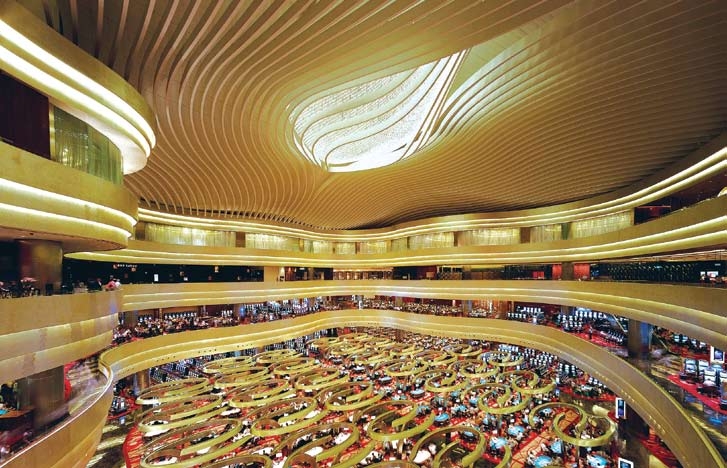
Ms Phua’s comments come at a time of national debate about the numbers of Singapore citizens gambling in the two integrated resorts (IRs)—Genting’s Resorts World Sentosa and Las Vegas Sands Corp’s Marina Bay Sands. The government disclosed in January that the IRs collected S$130 million in casino entry levies between April and November last year. Assuming for a moment that every transaction in that total was for a 24-hour pass at S$100 per time, that’s the equivalent of 1,300,000 individual casino visits by Singapore citizens in just eight months. Expressed another way, it amounts to 5,416 Singaporeans per day visiting the casinos during that period.

In reality, some of the S$130 million entry levy revenue will have come from yearly passes issued at S$2,000 per time, thus in likelihood pushing down somewhat the daily average number of Singaporeans visiting the casinos. But those purchasing a yearly permit must still make at least 20 casino visits per year to make it more cost effective than buying a daily pass.

There is also some anecdotal evidence from industry insiders that the 24-hour pass system may actually be creating incentives to gamble more intensively than might be the case if access were free to Singaporeans at all times.

An industry source told Inside Asian Gaming: “Because the day pass is for a 24-hour period from the time of purchase, what a lot of local players seem to be doing is buying an entry ticket in the evening, playing until maybe one or two in the morning, sleeping for a few hours, going to work and then going back to the casino the next day.”

RelatedPosts

Hoiana planning dedicated Singapore office to expand regional market

Hoiana planning dedicated Singapore office to expand regional market

Wed 28 Oct 2026 at 04:11
Genting Singapore significantly increases investment in Resorts World Sentosa expansion to US$5 billion

CreditSights: RWS 2.0 a costly necessity for Genting Singapore, but can it compete with MBS for premium mass?

Wed 21 Oct 2026 at 12:07
Encouraging signs for Singapore tourism as visitor numbers on the rise

Singapore’s GRA details greater use of artificial intelligence to improve regulatory effectiveness

Thu 8 Oct 2026 at 04:44
Singapore swing

Withdrawing bets after game result determined, recording non-card games now criminal offences under latest amendments to Singapore’s Casino Control Act

Tue 22 Sep 2026 at 06:44
Load More
Tags: Singapore
Share1Share
Newsdesk

Newsdesk

The IAG Newsdesk team comprises some of the most experienced journalists in the Asian gaming industry. Offering a broad range of expertise, their decades of combined know-how spans multiple countries across a variety of topics.

Current Issue

Editorial – Unraveling the gambling prohibition paradox

Editorial – Unraveling the gambling prohibition paradox

by Ben Blaschke
Wed 30 Sep 2026 at 19:32

I can’t help but notice the sudden and rapid emergence of the term “channelization” across the Asia-Pacific regulatory gaming space...

Reality check – Osaka looms over Korea’s casino boom

Reality check – Osaka looms over Korea’s casino boom

by Ben Blaschke
Wed 30 Sep 2026 at 19:10

Korea’s foreigner-only casinos are setting record revenue numbers, but they are also acutely aware of dark clouds on the horizon...

IAG EXPO 2026 – Elevating the Discussion

IAG EXPO 2026 – Elevating the Discussion

by Ben Blaschke
Wed 30 Sep 2026 at 18:41

The 2026 IAG EXPO was a week of celebration and intense discussion, with the common theme being that this is...

Loyalty in Numbers

Loyalty in Numbers

by Kelsey Wilhelm
Wed 30 Sep 2026 at 18:08

AI is reshaping how integrated resorts can identify and benefit not only premium customers but also grind mass, breaking the...

Hoiana banner
Aristocrat banner
GLI
Nustar
Solaire
Hann
NWR


IAG

© 2005-2026
Inside Asian Gaming.
All rights reserved.

  • SUBSCRIBE FREE
  • NEWSFEED
  • MAG ARTICLES
  • VIDEO
  • OPINION
  • TAGS
  • REGIONAL
  • EVENTS
  • CONSULTING
  • CONTRIBUTORS
  • MAGAZINES
  • ABOUT
  • CONTACT
  • ADVERTISE

Welcome Back!

Login to your account below

Forgotten Password?

Retrieve your password

Please enter your username or email address to reset your password.

Log In

Add New Playlist

No Result
View All Result
  • Subscribe
  • Newsfeed
  • Mag Articles
  • Video
  • Opinion
  • Tags
  • Regional
  • Events
  • Contributors
  • Magazines
  • Advertise
  • Contact
  • About

© 2005-2026
Inside Asian Gaming.
All rights reserved.

  • English