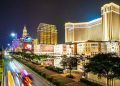


Macau’s money making potential more than makes up for occasional cultural misunderstandings between East and West
There’s no such thing as a ‘free market’ as far as legalised casino gambling is concerned. All governments reserve for themselves the right to regulate the industry and in some way control access to the market. That can be by all kinds of methods, including limiting the number of licences issued, or controlling the way operators market services to customers.
In Macau, however, other dynamics come into play in the relationship between the casino operators and the government and especially between the foreign operators and the government. These factors are only partly about the issue of protecting the population from the negative effects of gambling.
They are also about a dynamic that has repeated itself throughout history in the relationship between the Oriental and Occidental worlds. This is the West trying to make a lot of money from trade with the East, and the East wishing to learn from the West but cherry-picking those bits of Western technology and expertise that it likes, and casting aside or parrying the bits it doesn’t. It happened in earlier centuries. When the American mariner Commodore Matthew Perry first visited Japan in 1853 with the express aim of opening up the country to Western commerce, a high ranking Japanese official confided to his colleagues: “Our policy shall be to evade any definite answer to their requests while at the same time maintaining a peaceful demeanour.”
The problem is that Western traders in Asia don’t always—looked at from an Eastern perspective—play by the ‘rules’ of the game and allow their Eastern hosts to maintain a ‘peaceful demeanour’. Sometimes the Westerners shout and wave their arms about. That’s fine if you have a gunboat moored nearby in the bay, but less helpful if you’re armed only with a contract and a sense of your own rightness.
Westerners, it seems, can’t resist the temptation to winkle out and then call out apparent inconsistencies in the approach of their hosts. In Western culture, the ultimate smooth talker is the Devil himself, just waiting to charm and ensnare the unwary with warm words and wicked intent. In the East, smooth talking is not only polite but also morally neutral. Easterners are more interested in the final destination than the conversation they had on the way. As China’s reforming leader Deng Xiaoping was reported as saying when asked in a roundabout way whether market based reforms to the Chinese economy were a betrayal of the communist revolution: “Do not care if the cat is black or white, what matters is it catches mice”. A practical example of this East-meets-West difference in action is a recent episode involving Angela Leong, freshly installed as managing director of SJM Holdings in place of her 89-year-old husband, Dr Stanley Ho. Ms Leong announced a new resort project on Cotai independent of SJM and that would be a casino-free theme park focusing on sport and leisure.
It was reported in the local media that Macau Theme Park and Resort Ltd had acquired a 200,000 square meter site next to the Macao Dome for the MOP10.4 billion (US$1.3 billion) scheme. There was some suggestion in media reports that the scheme had found favour with the government because it fitted in with the latter’s plan for diversifying the local tourism industry. The really interesting part of the saga came a fortnight later, when Dr Ambrose So, Chief Executive of SJM, told journalists that SJM was talking to Ms Leong about a possible ‘synergy’ between her casino-less project and SJM’s projected plans for a (presumably casino-centric) property on land next door. Some Western commentators saw this as subterfuge. Many locals and the more experienced China hands in the Western community simply regarded SJM and Ms Leong’s approach as good tactics. In other words, it doesn’t matter what colour the cat is, or what you call the cat, as long as it catches the tourist mice.
Given how successful the new generation of Macau’s landbased casinos are proving to be, it’s important not to overstate the potential downside in terms of the cultural clash sometimesfound between the foreign operators and the Macau government. In early January, Macau’s gaming regulator, the Gaming Inspection and Coordination Bureau (DICJ), reported gross revenues for games of fortune during 2010 amounted to MOP188.34 billion (US$23.51 billion), a 58% rise year on year from 2009.
Casino gaming is a political talking point all over the world. What governments give—either in terms of issuing formal licences or in terms of de facto permission via nonintervention (as happens sometimes with online casino services)—governments can also take away. We’ve seen that with the Unlawful Internet Gaming Enforcement Act in the United States. We’ve also seen it with the crackdown on casinos in Russia—where casinos were moved out of major cities to four remote locations in the country—and in attempts by individual European Union states to limit expansion of land-based and online gaming services aimed at their citizens by exploiting get-out clauses in European law as it relates to open markets and fair competition.
No right-thinking person would deny Macau’s sovereign right to decide the direction of its casino industry. The main challenge for casino managers in Macau and analysts of the local market is to try and strip away any issues relating to cultural misunderstandings and look beneath at the language everyone understands—the bottom line. To that end, an interesting question is whether there’s an obvious strategy underlying government decisions on gaming regulation and policy or whether the government is taking an essentially ad hoc, reactive position as and when particular issues arise.
Twin track
There is some evidence to suggest it’s a bit of both. The ‘one for one’ policy on imported labour for casino construction sites announced in late April appeared to be in reaction to local unemployed demonstrating outside the Labour Affairs Department. Then again, the government may have used the protests as a convenient cover for something they already had in mind—i.e. to slow growth on the gaming supply side.
Opinion is divided both inside and outside Macau about how much the local leadership calls the shots on policy and how much it’s the central government in Beijing that drives the process. Perhaps a more relevant point is that Macau’s unusual, semiautonomous status within China, and its special political set up (neither a one-party system nor a representative democracy) means the Macau government tends to seek legitimacy by courting the approval of both the local population and Beijing in almost equal measure. The needs of the guest casino industry tend to trail some way behind in third place.
That’s largely because Macau’s gaming industry is an oligopoly (a government-held monopoly divided between a limited number of concessionaires and sub-concessionaires), unlike the all-comers free market (subject to probity checks) found in the US. If an operator in the US runs into regulatory or political problems of the sort first encountered in 2009 by MGM MIRAGE (now MGM Resorts International) in Atlantic City, that operator can always pull out of the market with the option of coming back in when the political dust has settled or trading conditions have improved. Alternatively, a casino operator in the US can use the threat of market withdrawal and loss of local jobs and taxes as a form of leverage with local lawmakers. No such leverage is possible in Macau. The operators know that if they pull out there will be any number of operators ready and willing to take their place. The withdrawing operator would also take a huge hit on lost infrastructure costs.
There’s a striking illustration of the difference between the political influence of the gaming industry in Las Vegas compared to Macau. In February last year, Democrat party lawmakers in the State of Nevada proposed levying a relatively modest US$32 million per year on casino operators as an additional contribution to the costs of the Gaming Control Board. The industry said no and lobbied hard against it. The State’s Republican governor said he wouldn’t support a tax increase unless there was consensus. That pretty much killed off the initiative.
Toe the line
In Macau, by contrast, when the government says ‘Jump’, the industry tends to ask ‘How high?’ Resistance on the part of operators to this trend may not be entirely futile. But Inside Asian Gaming has yet to see evidence that confronting the Macau government either overtly or covertly on regulatory issues has actually improved the commercial position of operators. It may actually have made things harder for them. That’s because Asia’s cultural secret weapon for dealing with troublesome individuals or corporations—passive resistance, whereby permissions slow to a crawl and piles of paperwork become ever-larger—functions in such a subtle way it’s difficult even to prove it’s happening.
An oligopoly also exists in Singapore’s casino market, so an interesting question is why doesn’t the Singapore government play faster and looser with its guest casino operators by changing the rules for its casino investors at short notice? One possible answer is that Singapore’s goals in introducing modern casino resorts were very clearly spelled out from the outset. They were to boost tourism numbers to 17 million arrivals by 2015 and tourism receipts to S$30 billion annually by that year. The Singapore government can measure the performance and success of its casino operator guests against that yardstick and, if necessary, ask those operators to operate more conservative or more liberal business practices (in relation to say credit issuance for VIP players) as circumstances allow.
By contrast, Macau’s aims in market liberalisation appear much more vague—i.e. a diversification of the tourist industry away from hard gambling. This vagueness means the implied social contract and the actual legal contract between government and operators is open to much wider interpretation and can become effectively a hostage to political expediency. Singapore’s clarity on casino policy and strategic economic aims is also arguably a function of the fact it operates an administrative system much closer to Western norms than does Macau.
The broad idea from the Macau government side seems to be that limiting the supply of gaming by curtailing further table supply and property expansion will somehow control demand for gaming. The thought following on from that is this will somehow mitigate or control the negative social impacts of Chinese citizens spending too much money in Macau casinos. The problem with this thinking is that such a strategy arguably only works if the supply issue is controlled from both ends—i.e. from the industry side and the visitor side. As ever more Chinese citizens become economically eligible to visit Macau, the numbers coming to gamble will also rise. Even if the number of tables were capped in the market beyond 2013, all that would happen then is that table and slot occupancy will simply rise to a point where the casinos are forced to use pricing to control demand and overcrowding, as they do already by raising minimum bets during peak times. If the ‘peak’ seen at Chinese New Year in terms of players on the main gaming floors then becomes the norm, higher pricing in the mass market will assist the operators in boosting margins across the calendar year. Pricing may also possibly push out the lower earners who can least afford to splash on gambling what little discretionary spending they have.
That may be the point. Perhaps the central government and the Macau authorities would rather have the lower-earning visitors to Macau eking out their spending on fairground rides or a trip to see the newly-arrived giant pandas from China in their new home at Coloane than splashing a week’s wages on a few games of baccarat at HK$100 a time.
Pricing barriers certainly seem to be an effective mechanism for controlling demand for other consumer services such as luxury hotels. But even modest earners will stretch their hotel budget for a special occasion such as a honeymoon or wedding anniversary. Would some of Macau’s less well-heeled visitors be resistant to pricing mechanisms as applied to minimum table bets? Certainly there is some anecdotal evidence that deeply held ideas in Chinese culture about fate and luck may provide enough motivation for those consumers predisposed to gamble to stretch their budgets as the need arises. Don’t rule out the return of visa restrictions some time in 2011 if operator supply-side restrictions and minimum bet pricing—as well as possible caps on win-rate sharing to match the existing caps on rolling chip commission—don’t dampen player demand.