

Ratings agency Fitch has downgraded SJM Holdings Limited’s Long-Term Foreign-Currency Issuer Default Rating from “B+” to “B-” with a negative outlook, citing the group’s weaker-than-expected operating performance and a deleveraging trajectory that is no longer consistent with its previous rating level.
The senior unsecured rating and the rating on outstanding notes issued by SJM’s subsidiary, SJM International Limited, have also been downgraded from “B” to “B-”.
A day after Moody’s Ratings also downgraded SJM following the company’s disappointing 3Q26 results announcement, Fitch said the negative outlook reflects material uncertainty over whether SJM can deleverage in line with the agency’s expectations, as well as significant upcoming refinancing needs, including senior notes and bank loans.
“SJM’s deleveraging trajectory has been further delayed, as weaker-than-expected growth in industry gross gaming revenue (GGR) and a weaker-than-expected market share trend have led to weaker EBITDA and cash flow,” Fitch explained.
“We expect the company’s EBITDA leverage to remain high at 9.6x in 2026, with slower deleveraging to 7.1x in 2028, compared with our previous forecasts of 7.8x and 5.6x, respectively.”
SJM’s looming debt maturities include its US$500 million senior notes due in January 2028 and its HK$19 billion syndicated loan due in June 2028.
Fitch said it expects the company to generate minimal free cash flow and have a limited liquidity buffer for debt repayment, resulting in significant refinancing needs. It also warned that failure to demonstrate material progress toward refinancing could lead to further rating action.
Factors impacting SJM include a general weakening of Macau industry GGR – an ongoing challenge attributed to a softer Chinese economy, the effects of the football World Cup in June and July, and the enforcement of new Chinese offshore trust tax rules introduced in July. These factors have contributed to weaker gaming demand.
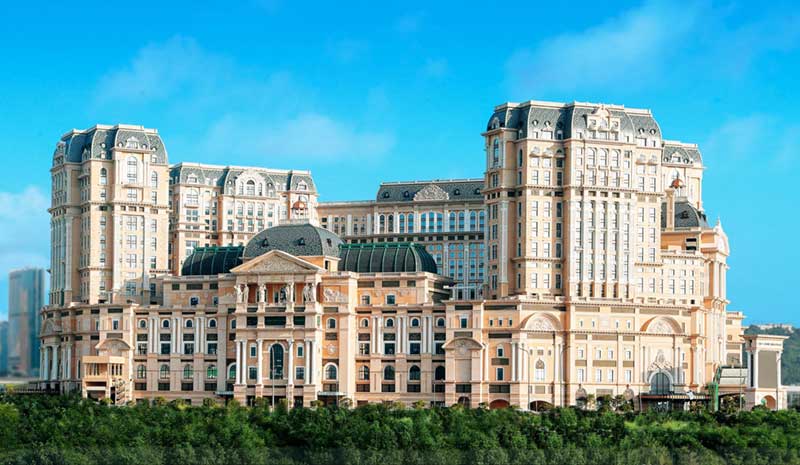
SJM’s market share also fell to 9.3% in 3Q26, down from 9.8% in 1H26, as renovation work resulted in disruption to Grand Lisboa Palace’s gaming floor and hotel room capacity.
On a more positive note, the company has reduced costs, with daily operating expenditure dropping to HK$24.8 million in 3Q26 from HK$25.7 million in 1Q26 and HK$26.2 million in 2Q26.
“However, the reduction was not sufficient to offset weaker revenue,” Fitch explained. “The company sees further room for cost-cutting in 2027, and we have assumed that daily operating expenditure will fall further to HK$24.0 million in 2027. However, the reinvestment rate is likely to remain high, given a competitive operating environment.”
RelatedPosts