
Macau’s six gaming concessionaires have committed a combined MOP$9 billion (US$1.1 billion) to the Macao SAR Government’s Guidance Fund – a government-backed investment vehicle designed to help build industries beyond casinos and tourism.
The contributions will count towards the concessionaires’ investment obligations under their current 10-year gaming concessions.
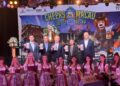
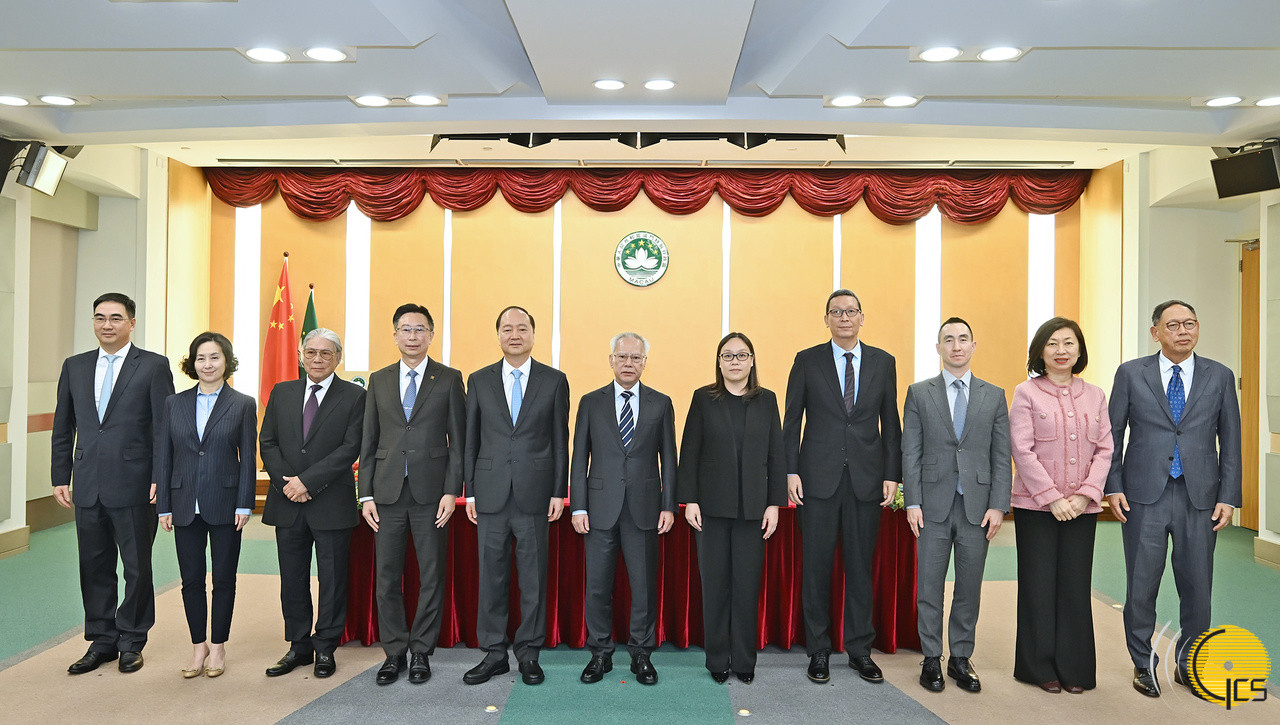
As per a government announcement, the commitments were formalized on Friday when representatives of the six operators signed agreements to become limited partners in the Macao SAR Government Guidance Fund No 2, Limited Partnership Fund, at a ceremony witnessed by Macau Chief Executive Sam Hou Fai and other senior officials.
The fund forms part of a broader government initiative to accelerate Macau’s economic diversification by directing capital towards emerging industries, technological innovation, industrial upgrading and projects supporting closer integration with Hengqin and the wider Guangdong-Hong Kong-Macau Greater Bay Area.
The fund’s initial capitalization totals MOP$20 billion (US$2.5 billion), comprising MOP$11 billion (US$1,4 billion) from the government’s fiscal reserves and MOP$9 billion from the six gaming concessionaires.
The signing ceremony marked the fund’s formal commencement of operations.
The individual commitments of the concessionaires were unveiled by way of a series of stock exchange filings, and are led by Sands China subsidiary Venetian Macau, which has pledged approximately MOP$2.30 billion (US$285 million), followed by Galaxy Entertainment Group subsidiary Galaxy Casino Ltd at approximately MOP2.27 billion (US$281 million).
Wynn Resorts (Macau) has committed up to MOP$1.37 billion (US$170 million), MGM China subsidiary MGM Grand Paradise MOP$1.24 billion (US$153 million), SJM Resorts MOP$992.7 million (US$123 million) and Melco Resorts (Macau) MOP$828 million (US$102 million).
In its filing, Galaxy said it “believes that participation in the Fund complements the Group’s broader investment and development initiatives in support of Macau’s long-term economic development. GEG is also pleased to support the Macao SAR Government’s efforts to promote the appropriate diversification of Macau’s economy and the coordinated development of Macau, Hengqin and the Greater Bay Area.”
The contributions are to be recognized as part of the operators’ investment arrangements under their existing concession contracts, which include substantial commitments to non-gaming development and economic diversification.
The guidance fund is designed to mobilize public and private capital to support Macau’s longer-term economic development beyond its established gaming and tourism industries.
Its investment scope includes emerging industries, industrial upgrading, the commercialization of scientific and technological research, technology start-ups and projects aligned with national strategic priorities. Investments may also support cooperation between Macau and Hengqin, as well as development across the Greater Bay Area.
An address at the signing ceremony, Macau’s Secretary for Economy and Finance, Ng Wai Han, emphasized that the government is proactively aligning with national development strategies and fully implementing the “1+4” strategy for appropriate economic diversification, with the goal of enhancing the resilience of Macau’s economy.
Promoting appropriate economic diversification is, she added, a “compulsory task” for Macau and one that requires the concerted efforts of both the government and all sectors of society.
Ng, who is also the former Director of Macau’s gaming regulator – the Gaming Inspection and Coordination Bureau – noted that the six concessionaires play a pivotal role in the city’s development into a “World Centre of Tourism and Leisure” and acknowledged they have have “consistently fulfilled their investment commitments in non-gaming sectors as stipulated in their concession contracts.”
The establishment of the Guidance Fund is, she said, the outcome of amicable consultations between the SAR Government and the six enterprises, reflecting a spirit of concerted effort between the government and the private sector, as well as the business community’s confidence in Macau’s future development.
In a note, Seaport Research Partners analyst Vitaly Umansky observed that each operator’s contribution amount to around 6.9% of its non-gaming pledge, describing it as “a clean pro rata allocation, with each operator treated effectively the same as in the concession agreements.”
He added, “We view this announcement as largely neutral for earnings and cash flow, but mildly positive for government relations as these investments highlight the industry’s ability to work with the government on its objectives and be good corporate citizens.
“The gaming operators effectively swap some of their capex commitments for a passive, policy-directed financial investment (thus also eliminating construction risks, operating costs, etc). The capital will be locked for 15-plus years.
“In theory operators can earn returns in the long-run on these investments, but we are skeptical there will be returns and capital may never be returned.”