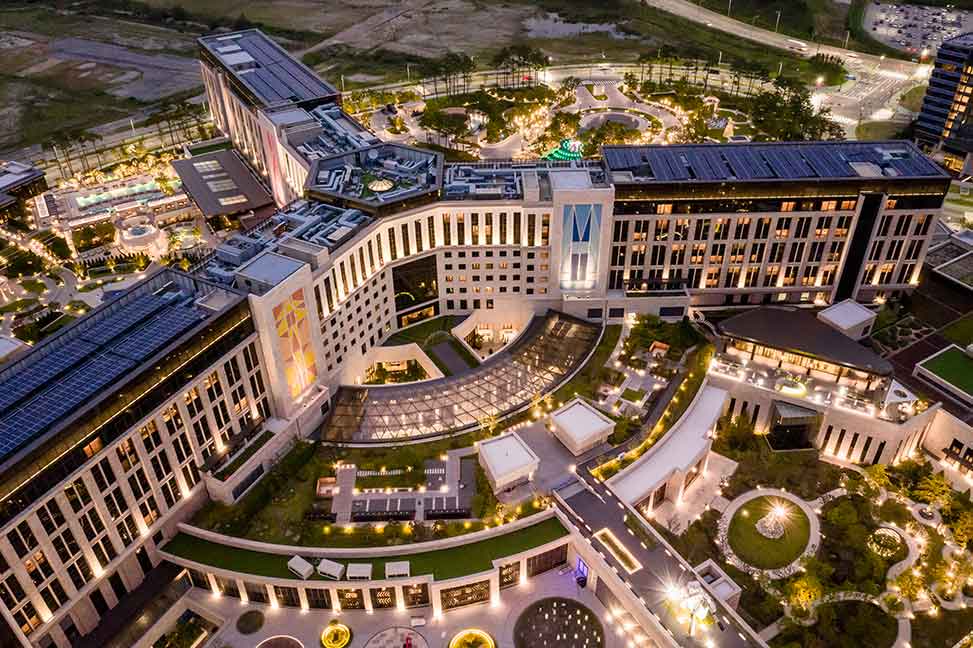

The share prices of South Korea’s listed foreigner-only casino companies have hit 12-month lows over the past week, reflecting deeply embedded market concerns at a time when casino revenues are at all-time highs.
The decline in stock prices also comes at a time when Korea is enjoying a surge in inbound visitor arrivals – a trend that is expected to continue through the second half of 2026.
As reported by local news agency Newsis, shares in the country’s leading foreigner-only operator Paradise Co hit a 52-week low of KRW12,220 on 3 July, as did Grand Korea Leisure at KRW10,150. Lotte Tour Development Co Ltd, operator of Jeju Dream Tower, also fell to a 12-month low of KRW14,070 on 29 June.
Newsis attributed the fall in share price to the fact that strong earnings still did not live up to market expectations, failing to show clear signs of earnings improvement and with operating profits declining due to cost burdens.
Paradise Co reported a 56% year-on-year decline in profit in 1Q26 despite revenues rising 3.8% – a contrast partly attributable to the acquisition of the Grand Hyatt Incheon West Tower at integrated resort Paradise City.
This comes as South Korea surpassed 10 million foreign visitor arrivals in 2026 late last month, prompting expectations that the country may achieve an all-time tourism high.
Samsung Securities analyst Lee Hye-in attributed the growth to price competitiveness due to the continued weakness of the Korean won and an increase in Chinese tourists choosing Korea as an alternative travel destination amidst deteriorating relations between China and Japan.
This, Lee added, was a trend likely to continue.
“We expect Japan’s policies to curb overtourism – such as the extension of visa-free entry for Chinese group tourists, the increase in tourism tax (from JPY1,000 to JPY3,000) starting this month and stricter single-entry visa requirements for foreigners – to act as additional catalysts for the inflow of tourism demand into Korea,” the analyst explained.
“As the structural growth trend for domestic inbound tourists remains valid, we forecast that the relative performance advantage of domestic companies … will continue in the second half. Accordingly, we believe the multiple premiums for domestic companies should also expand.”
RelatedPosts