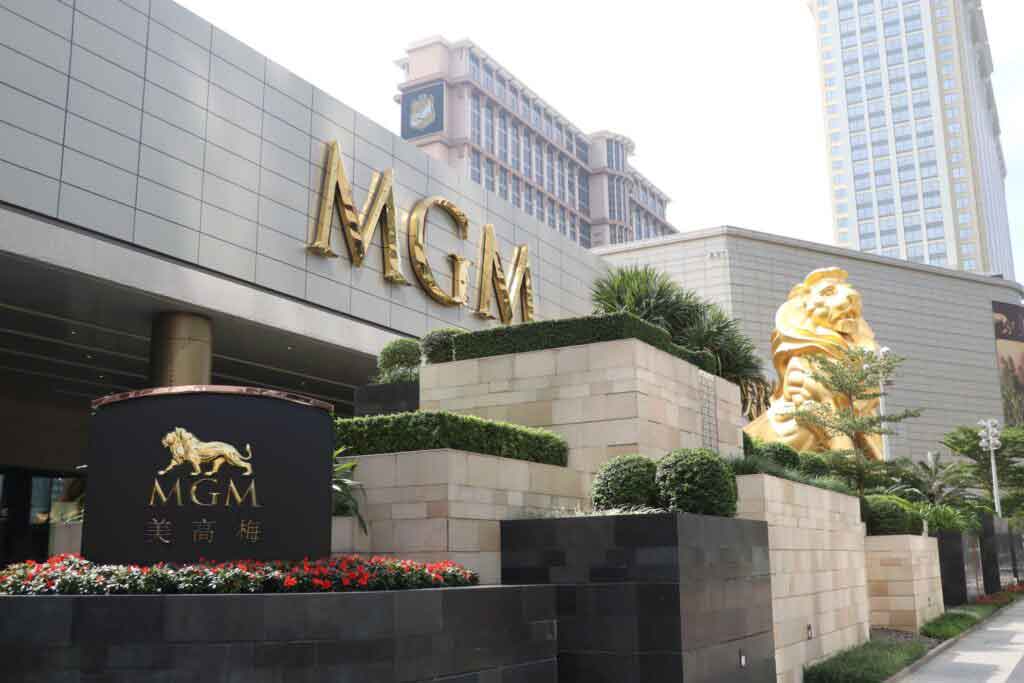

MGM China will open up 124 new premium mass suites at its flagship MGM COTAI property next month, but the company admits it remains unsure how it will spend the next US$1.5 billion it has committed to spend on non-gaming initiatives by 2032.
Bill Hornbuckle, the CEO and President of MGM China’s parent company MGM Resorts, provided some insight into the current state of MGM’s non-gaming spend during an appearance at the J.P. Morgan Gaming, Lodging, Restaurant and Leisure Management Access Forum 2026 in Las Vegas, revealing that it has currently outlayed around 35% of the US$2.3 billion it has committed to spend under its current 10-year concession.
While MGM has introduced a series of successful non-gaming attractions since 2022, including resident show Macau 2049, the Poly MGM Museum and multi-purpose venue Fantasy Box at MGM MACAU, Hornbuckle noted that the time had come where many Macau operators were taking stock of how to best utilize their remaining spend commitment – in MGM’s case around US$1.5 billion.
“We are all getting to a point – and we have underwritten and sponsored many activities, sports and otherwise, throughout the community – how we then spend the next money, particularly given that our scale and scope and footprint is a bit more challenged,” he explained.
“We’re going to have a lot of conversations around that with the government on how to make it more effective and efficient.”
MGM’s gaming path is much clearer, according to Hornbuckle, who said the company will continue to lean into the premium mass segment even with VIP having exhibited strong growth in the latter half of 2025.
Having seen market share rise from below 10% pre-COVID to more than 16% today thanks largely to its expanded premium mass offering, MGM COTAI will in April release 124 new suites into the market – adding to other related renovations in recent years at both its Cotai and its peninsula properties.
“Premium mass has really made a difference and we’re pushing hard into that,” Hornbuckle said.
“Both [premium mass and VIP have been strong] and we’re still converting spaces today that used to be junket into either VIP or premium mass spots for us. But VIP itself, I can tell you of our 10 biggest customers, six or seven of them are considered in premium mass and the other three or four VIP which just relates to the way they want to deal and play the game. It’s mostly an individual decision, in many instances.
And I don’t see that changing greatly. I think Macau is on a pretty steady path now for the next year or two in the context of the shape of the market, the scale of the market, and how it’s being catered to and addressed.
“As I said, we all have an obligation to put more money into these non-gaming assets and it will be interesting to see how that gets manifested over the next couple of years, but I don’t think the dynamic of how we’re doing the casino marketing is going to change.”
Hornbuckle added that market dynamics through the first two-and-a-half months of 2026, including the Chinese New Year period, remain strong while MGM itself expects to enjoy the benefit of a full year of new high-end gaming and suite products it unveiled last year.
However, further expanding on its market share position would be a challenge given the group’s Macau footprint.
“We’ve enjoyed around 15% market share and I think over time we’ll continue to do that,” he said. “I don’t think the market changes much in that context. Macau remains competitive – I don’t think that’s news to anybody here – and I don’t know that anything dramatically going to change this year in the context of competition. I think it’s more of same – it’s a dog fight.”
Japan on the move
MGM Resorts spoke glowingly of the steady contribution MGM China makes to its coffers – around US$250 million in free cash flow annually once dividends and branding fees are taken into account – but Hornbuckle was equally effusive on the potential of its US$10 billion Japan integrated resort project, MGM Osaka – due for completion in 2030.

The MGM CEO likened Japan to the current Singapore market, outlining his hopes of an initial US$2 billion cash flow business which would place MGM at around US$800 million given its 40% stake.
“It’s a meaningful business,” Hornbuckle said. “I think it potentially could be bigger than that, but time will tell. If you put it in perspective, we are an hour-and-a-half closer to Shanghai and Beijing than Macau. And so the proximity, the scale, what’s happening in the pachinko business to this day in Japan which is over US$30 billion [in GGR].
“We’re pretty sure about it. One of the additional concerns we saw was that we’re this isolated thing down in Osaka Bay but a quarter of a million people a week went through [the site] during the last week of the Osaka World Expo (held from April to October 2025).
“The infrastructure is there, it works and I think the product we’re going to build will be exceptional, world class. Given the things we do and what we’re known for, I’m very excited by what that potentially brings us. I think the reward will be substantive.”