

In this regular feature in IAG to celebrate 20 years covering the Asian gaming and leisure industry, we look back at our cover story from exactly 10 years ago, “Money in the middle”, to rediscover what was making the news in February 2016!
 Profiling the typical Macau tourist – particularly those from mainland China who make up the majority of all visitors – has long been a central pastime of those tasked with analyzing the state of the city’s financial health.
Today, the discussion tends to center around the dominant contribution of the premium mass visitor to gaming revenues following the decline of the junket VIP sector in recent years. To some extent at least, this answers some of the questions us industry folk were asking a decade ago, around the time VIP was grappling with its first headwinds.
In the cover story of IAG’s February 2016 edition, titled “Money in the middle”, we explored the role that China’s rising middle class would play in Macau’s future and whether this lower-spending segment could cover the MOP$120 billion decline in gaming revenues experienced in 2015.
 The issue was, and still is, seen as a complex one given the complicated estimates that go into calculating just how many people comprise China’s middle class and what their spending power actually is.
As noted at the time, China’s middle class was forecast to expand to as many as half a billion people by 2026, while 2016 estimates had the middle-class numbering between 109 million people with a net worth of US$50,000 to US$500,000 and 340 million individuals with annual earnings from US$6,000 to US$25,000.
China Market Research Group described China’s middle class as earning US$9,000 to US$35,000, although observers noted that official reports likely understated actual mainland income.
 The question was, therefore, whether China’s middle class had enough spending power to replace Macau’s missing high-end players. One estimate, which suggested the average Chinese visitor to Macau spent MOP$5,000 (US$625), would have seen Macau require some 24 million additional visitors to produce the lost MOP$120 billion in revenue.
However, others suggested that China’s middle-class consumers could spend as much as US$10,000 in Macau, assuming this was their one big trip of the year, and at that rate of spending 1.5 million visitors would make up for 2015’s fall in gaming revenue.
 “All of that money would not be spent on gaming, but some would go to segments with higher profit margins, most notably lodging,” IAG noted.
Although penetration into Macau’s middle class remains largely untapped, IAG also observed at the time that operators were already working to provide the amenities these travelers were looking for.
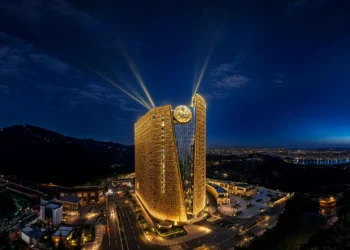
These included Melco Resorts via its Studio City resort – opened in October 2015 without VIP gaming and instead targeting the middle class customer with its theme park-style rides, magic shows, international nightclub brand Pacha and a 5,000-seat arena.
“Ultimately, the rise of the middle class is what drives growth in Macau and Asia,” Melco Chairman and CEO Lawrence Ho declared at the Studio City opening. He added, “How many more billionaires are going to drop out of trees in the next 10 years?”
Hogo Digital Managing Director Chris Wieners stated, “Mass market customers who are willing to spend at a more premium rate than the previous low-end mass that Macau was accustomed to will be key moving forward.
 “It will become a volume game – and I believe it’s a game Macau can win. Considering China’s middle-class and the growth potential over the next five years, any anomalies withstanding, and the fact that the majority of the Chinese middle class have never stepped foot in Macau, the destination has potential to become the destination of choice for Chinese consumers.”
A wise premonition, perhaps, given that Macau welcomed an all-time high of 40.06 million visitors in 2025, highlighting its broadening appeal to visitors of all types.