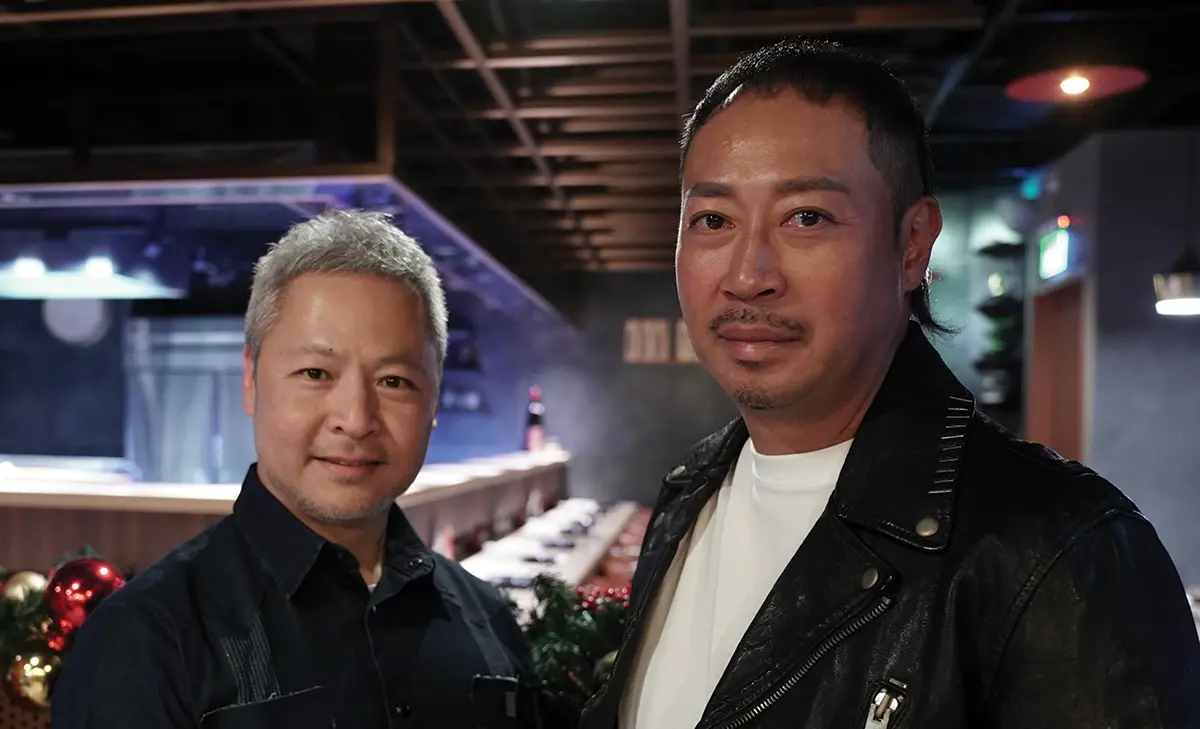

Founded by a group of friends that include Dickson Yip and Macau Slot CEO Stephen Ho, Japanese restaurant Izakaya Yabai – located on the Macau peninsula – highlights the challenges faced by small businesses in Macau but also the city’s unique F&B offerings outside the bright lights of its world-famous integrated resorts.
Behind the well-versed recovery story of Macau’s gaming industry lies the more sobering reality facing the hundreds of small and medium-sized restaurants that litter the city’s streets. While concessionaires have seen their revenues rebound strongly post-COVID – and with particular vigor during the second half of 2025 – Macau’s independent F&B outlets are still recuperating, with the influx of visitors tempered by the outflow of locals since borders reopened a little under three years ago.
 Nowhere is this highlighted more than Japanese izakaya restaurant Izakaya Yabai, located on the Macau peninsula just a short walk from Sands Macao.
“When the gates opened, everybody started traveling again, including the Macau people, so all the retail business and F&B business began dropping very quickly,” explains Dickson Yip, one of the restaurant’s founders.
“So, it’s quite challenging at the moment, very challenging, because we are mainly focused on local guests, the local community. Our location is not close to the traditional tourist attractions, so it’s not easy to guide tourists from Hong Kong or England to come here.
“Having said that, we’ve done a lot of promotions with local platforms to try and attract more local people, and the results have been positive so far.”

While the post-pandemic hurdles faced by local Macau businesses have been well documented, the Izakaya Yabai story is also one of innovation – a perfect representation of the cultural melting pot that is this unique Chinese territory.
The restaurant is the brainchild of a small group of friends who first broached the idea of opening a Japanese eatery around seven years ago during their regular Thursday night get-togethers. Aside from Dickson, its founders include Stephen Ho, perhaps best known in the industry as the CEO of Macau’s only sports betting concession, Macau Slot.
The restaurant was originally envisioned as a yakitori-style space, in part because the friends would routinely frequent similar establishments when visiting Japan, but later evolved into an izakaya concept because they were drawn to the idea of providing guests a cozy, welcoming place to eat and drink long into the night. Izakaya, for the record, literally means “a place to stay and drink”.
“The idea was to open a place for people to do the same thing that we love to do, since we all love Japanese food,” Ho explains.
“At the time, we were mainly focused on yakitori rather than opening a full-on Japanese restaurant, and of course yakitori pairs fantastically with sake and beer, so having a loud, busy, cozy place was just perfect for us. That’s what we thought. But what we realized very quickly was that it was this izakaya concept that we really wanted to achieve: being in a place with friends, eating and drinking, somewhere you enjoy being – it serves all the purposes.
 “So, we’ve been gradually converting the concept. I would say we are in the middle stage right now – the second stage but not ultimately the final stage – because it takes quite some effort to transform a yakitori restaurant into the izakaya style. We’ve suffered a lot and it has taken our chefs time to get used to using the hardware we have in the restaurant, which isn’t really fully set up for izakaya yet. But we can see the sun coming up and we think we are on the way to achieving what we always had in mind – to become 100% izakaya cuisine.”
Sake, of course, is at the heart of the Izakaya Yabai offering. The restaurant menu boasts over 50 types of sake, pending seasonal changes, all chosen using a combination of science and, of course, personal experience!
“I mean, between me and Stephen, we definitely drink a lot of sake!” Yip laughs. “Our knowledge is built on consumption.”
 “But we really lean towards types of sake that best match the food we serve,” Ho chimes in. “That’s ultimately how we pick our sake.”
Like many in Macau who follow the dream of launching their own business, Izakaya Yabai has been a learning experience for the group. None of them came with any meaningful experience as restaurateurs and they have quickly discovered just how volatile such businesses can be.
“We opened the restaurant around Chinese New Year in [February] 2022 focusing solely on dinner and late-night service so that people had somewhere to eat, drink and stay late, because at the time the world was still locked up,” Yip says. “And at that time our business was pretty good.
 “Since then, as we’ve evolved, we’ve suffered a lot emotionally with all the discussions and arguments, staff shortages and all the things that happen with a restaurant. For example, we decided to add lunch service, and it has taken a while to grow that and let people know about the new dishes we have added to the menu.
“I would say too that, although we have had very good feedback from local Japanese here in Macau, we don’t have a lot of Japanese customers, so we are still trying to educate our main clientele, which is local Macau people.”
Adds Ho, “Trying to build another culture in a different part of the world, to introduce Japanese izakaya into Macau, it’s tough. We know that. So, we are spending a lot of time to educate our customers on how they should enjoy it.
 “A lot of them come in and will order all of their food from appetizer to dessert, but when it comes to izakaya food and sake, there is a sequence. You start with maybe a beer, order something from the appetizer section, take a look at what’s seasonal, maybe have some rice or sushi and then order dessert later. That’s what we want people to do – order as they go along so we don’t sell more than we need to and we don’t waste food.
“It’s a process but it’s going to take a long time for people to get used to it.”
Despite the challenges, and the disagreements they’ve had over the years, Yip and Ho certainly agree on one thing: that Izakaya Yabai will never compromise on the quality of the food and drink it serves.
 “Now that we’ve been around for a while we have two main insights,” Yip states. “One is that our situation is not as good as we had hoped at this stage because the customer base is still not very consistent. The other is that we should never downgrade the quality of the ingredients that we order. We don’t want to compromise on that.
“Of course, that means we earn less but we want to portray the image, that when people come into our restaurant and spend some money, they are getting real value because of what we offer.”
“Ultimately,” adds Ho, “we want to create a place where we can serve great food and the best sake that we can find in the world in a place where the cooking is done with heart and where everybody can come together and enjoy it. That’s what we want in the long run.”