
As Generation Z – those born between 1995 and 2010 – gradually becomes the main force in consumption, the IP economy has risen rapidly in mainland China. The Macau government is also seizing on this trend, introducing a series of branded IPs in a bid to boost development of the tourism industry. But how effective is this strategy?
The IP economy – short for intellectual property economy – is an economic model that realizes commercial value by licensing, adapting or developing original content such as literature, animation, film and television, or games into products or services. Among global brands, Disney is one of the most recognized examples; in 2024 alone, its IP licensing business generated US$3.78 billion in revenue.
 The rise of mainland IP brands
Following the COVID-19 pandemic, original IP brands from mainland China have experienced explosive growth, with Generation Z’s consumption of IP-related products becoming a dominant trend.
According to the “2025 White Paper on the Development of China’s Licensing Industry”, the total retail sales of IP licensed products in China reached CNY 155.1 billion (US$21.6 billion) in 2024.
The enormous potential of mainland IP brands has also attracted the attention of Macau’s gaming operators. For example, the success of the AAA game “Black Myth: Wukong” has created a sensation in China, and MGM China responded by staging a symphonic concert, featuring a selection of music from the game and transforming it into an innovative addition to Macau’s arts scene.
Macau’s remedy?
The Macau government views the IP economy as a potential solution for revitalizing local communities. Earlier this year, the government hosted the “Flora Fête with Sanrio characters in Macao” event in the northern district, leveraging the famous Japanese cartoon brand Sanrio in combination with community resources. The initiative aimed to attract residents and tourists to explore and spend time in local neighborhoods, injecting new vitality into the area.
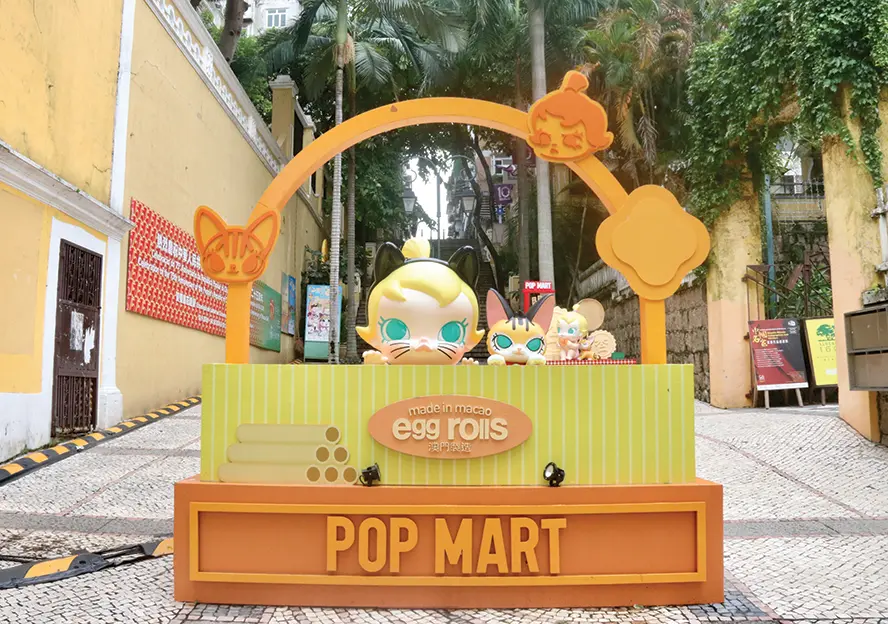
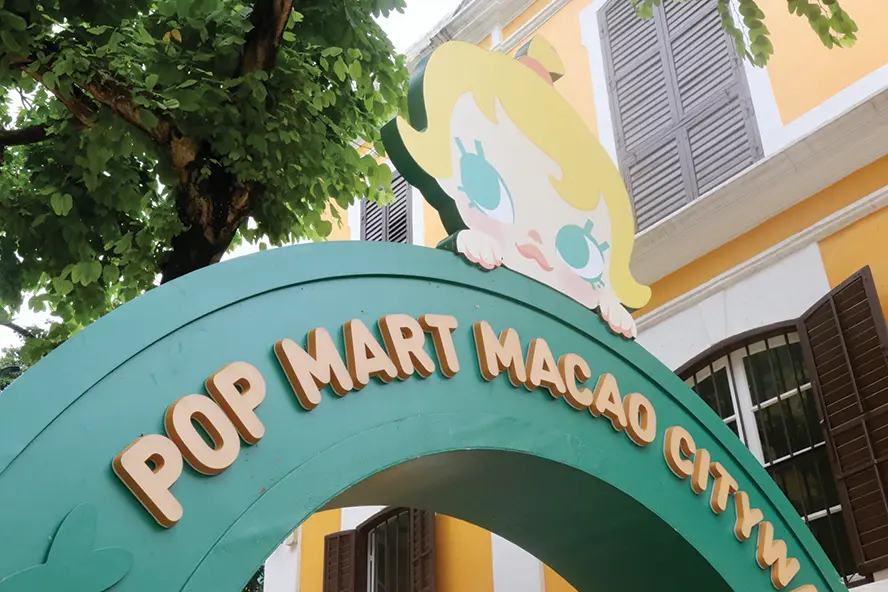
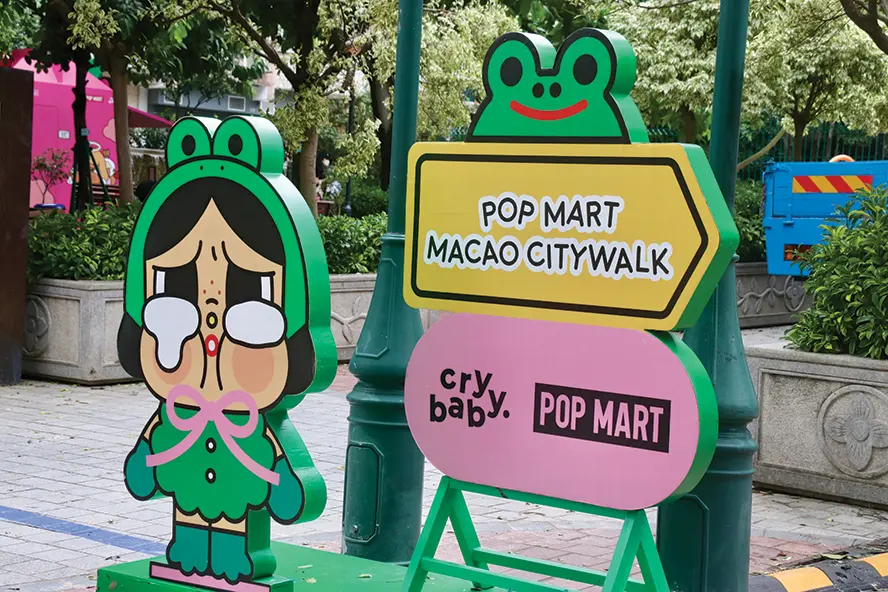
In addition, the government recently partnered with mainland China’s renowned collectible toy brand POP MART to launch the large-scale project “POP MART Macao City Walk”. With a budget of MOP$8 million (US$1 million), the project placed the globally popular Labubu decorations in four different communities, hoping to use IP to draw crowds.
 To address the challenges brought about by the withdrawal of satellite casinos, the government is also planning to introduce “IP installations” in the NAPE area to improve the local business environment and attract more visitors.
Challenges and doubts facing Macau’s IP economy
Although Macau has successfully introduced some internationally renowned IPs, the effectiveness of these efforts has been widely questioned. Lau Pun Lap, President of the Macau Economic Association, stated in an interview that the scale of IPs brought into Macau is limited, and most tourists only visit for photo opportunities without generating substantial economic growth for local communities.
“When promoting this policy, the government did not consider how to strengthen cooperation between community merchants and organizations,” he said. “For example, opening up IP licensing could allow nearby merchants to become actively involved, which would be far more effective.”
Merchants in the NAPE area have also expressed reservations about the introduction of IP brands. One merchant bluntly remarked, “IP installations can’t put food on the table,” arguing that relying on decorations alone will not improve the local economy.
 While Macau has managed to bring some well-known international IPs into local communities, its approach is quite different from the development model seen on the mainland. International IPs in Macau are mainly presented as “exhibits”, relying mostly on decorative installations to attract crowds rather than focusing on the sale of IP-related products. In addition, most IP initiatives introduced by the government are short-term exhibitions, making it difficult to generate long-term impact or create unique value.
This model prevents local businesses from fully leveraging IP brands to boost their performance, with little real synergy between brands and merchants. As such, IP value is not truly integrated into the local economy.
The key to Macau’s IP development lies in strengthening the connection between brands and the local community. Compared to the mainland’s approach, which uses original IPs to drive product sales, Macau lacks the support of homegrown IP brands. Simply introducing international brands is unlikely to forge deeper community ties or allow brand stories to resonate with local culture.
 Although Macau’s IP economy has yet to achieve the desired results, its development potential should not be underestimated. If Macau can step up efforts to nurture local original IPs, provide more policy support for IP projects and focus on cultivating professional talent, it stands a good chance of further developing the IP economy and contributing to economic diversification.